Following bethune's footsteps


Retired Canadian history teacher offers rare insights on nation's best-known foreigner with his biography
December marked 75 years since chairman Mao Zedong wrote the famous eulogy that familiarized millions of Chinese with the name of Norman Bethune (1890-1939), after his death in China.
The best-known foreigner in China, as Spanish diplomat to Beijing Ignacio Morro put it, the Canadian doctor is considered a selfless saint-like figure who helped the Chinese people through hard times, and the Spanish people in 1930s, too.
| Roderick Stewart and wife Sharon visited Songyankou, at the foothills of Mountain Wutai in Shanxi province during a 2005 trip to China, where Bethune attempted to establish a "Model Hospital". Photos Provided to China Daily |

| Roderick Stewart with Marshal Nie Rongzhen at the Great Hall of the People in 1972. |

| Roderick Stewart poses with He Zixin, Bethune's xiaoguei (young Chinese colleague), in Beijing in 1972. |

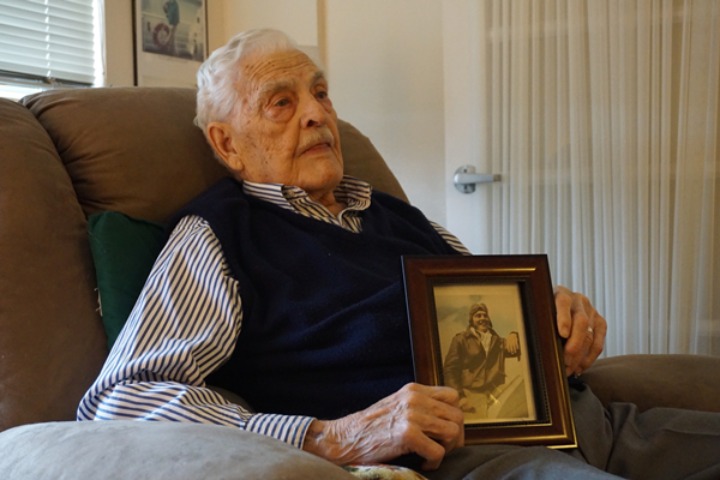
But for Canadian Roderick Stewart, an 80-year-old retired history teacher, Bethune is a neither a propaganda tool nor a godlike figure as some have depicted him.
"Bethune was a human being, who I can say has become my life," Stewart said.
Stewart has devoted more than 45 years of his life to studying Bethune, which has yielded five books that were published globally, including in China. The biography Phoenix: The Life of Norman Bethune by Stewart and wife Sharon is being adapted into a 3D movie by 3DIMP, and is set to be launched for an international audience in the coming months.
One of his Chinese friends Qi Ming, a professor at Bethune Military Medical College in Shijiazhuang, Hebei province, said the moment he stepped into Stewart's house he was stunned by the study jammed with books about Bethune and letters Stewart received for research.
"Once I asked, you're not a communist nor a medical professional, so why are you so obsessed with him?" Qi said.
He simply replied, "how many Bethunes do we have in Canada? How many in the world? There is only one".
Stewart said that the prime characteristic of Bethune that attracted him was his tenacity, and his "unwillingness to give up, which came from a belief in himself".
"Like a terrier, a dog which grabs something and struggles mightily to resist any attempt to yank the object from its teeth," Stewart said.
Stewart is just like Bethune. He impressed Qi with his determination to find out every detail and fact. "We've been writing like one e-mail a day, as he checked through every detail he asked me about," Qi said.
The Mandarin-speaking writer also wrote some 5,000 words replying to China Daily's interview questions. For his book Phoenix, he located 77 rare photos and many precious documents, after talking to 300 people who were knew Bethune from all around the world.
The Stewarts have traveled to China five times to follow the footprints of the doctor, and to meet Bethune's former colleagues, patients and students, and even Bethune's "boss" when in China, Marshal Nie Rongzhen.
The first trip, in 1972, saw Stewart arrive in China several weeks after US president Richard Nixon's visit.
He got an invitation from the first Chinese ambassador to Canada Huang Hua in 1969. At the time Stewart was starting to get interested in Bethune, after showing his students (who knew Bethune as much as he did) a video in history class.

"When I visited Shijiazhuang in April 1972, beasts of burden (camels, donkeys and horses) were much more commonly seen on the city streets than trucks," he said.
Fact-based presentation
Stewart's quest started at a time, in the depths of the Cold War, when many Canadians knew little about Bethune.
While in China, there were prevailing "ideologically-shaped Chinese descriptions of Bethune", he said.
With the goal of presenting a "fact-based biography to describe Bethune the man as a whole person", he returned in 1975 for more information, and later for longer stays as an English teacher in Chongqing in 1979 and Harbin, Heilongjiang province in 1983.
Stewart said his research had "a mountain of problems". But he had the fortune of the companionship of his wife Sharon, a skilled researcher and veteran editor.
"In our house our studies are side by side," Stewart said.
The couple was about to quit Bethune when they found a great deal of new material in different countries around 2000.
They obtained an unpublished autobiography of Henning Sorensen, Bethune's interpreter in Spain, and were offered by the daughter of Jean Ewen, the Canadian nurse who went to China with Bethune, the chance to read their mother's autobiography.
Degree of change
In 2005, accompanied by Bethune's former Chinese student Zhang Yesheng, the Stewarts arrived in China again to follow the doctor's footsteps throughout the former Jin-Cha-Ji border region in the 1930s.
"After an absence of 30 years. I was staggered by the degree of change," he said. "I never dreamed that such a revolutionary change could take place in my lifetime in China. Hao ji le (Mandarin for fabulous )!" he said.
Also changing is the Chinese perspective of Bethune. "Truth has begun to nudge aside ideological fairy tales," he said.
Cheng Xiaoming, Chinese publisher of Stewart's book, believes it's their lifelong work on Bethune that help form the shifts.
"The Stewarts are the first to picture Bethune as a man who has a temper and preferences,' Cheng said. "They offer new humane touches into the doctor's adventurous life."
Qi and Cheng regard Stewart's books highly because "they offer insight to Chinese society about why faith and professionalism, which Stewart's Bethune carried up to his death, can be decisive".
The Stewarts initiated a Sino-Hispanic-Canadian cultural cooperation project called "Bethune 2014", trying to make more people aware of Bethune's role.
"I have until now had a long and cordial relationship with the Chinese that goes back to my early youth," Stewart said.
He added that, as a child, he liked the Cantonese dishes a Chinese employee in his father's factory in Niagara Falls used to cook for him.
"I learned to use chopsticks before my teens; Sharon and I still buy food in Chinese supermarkets once a week."
"So my memories of China are deep, warm, and lasting," he said.
meijia@chinadaily.com.cn
(China Daily USA 01/01/2015 page11)