



Hidden toll on urban wildlife revealed
Experts gather in Nanjing to discuss roadmap to reducing roadkill









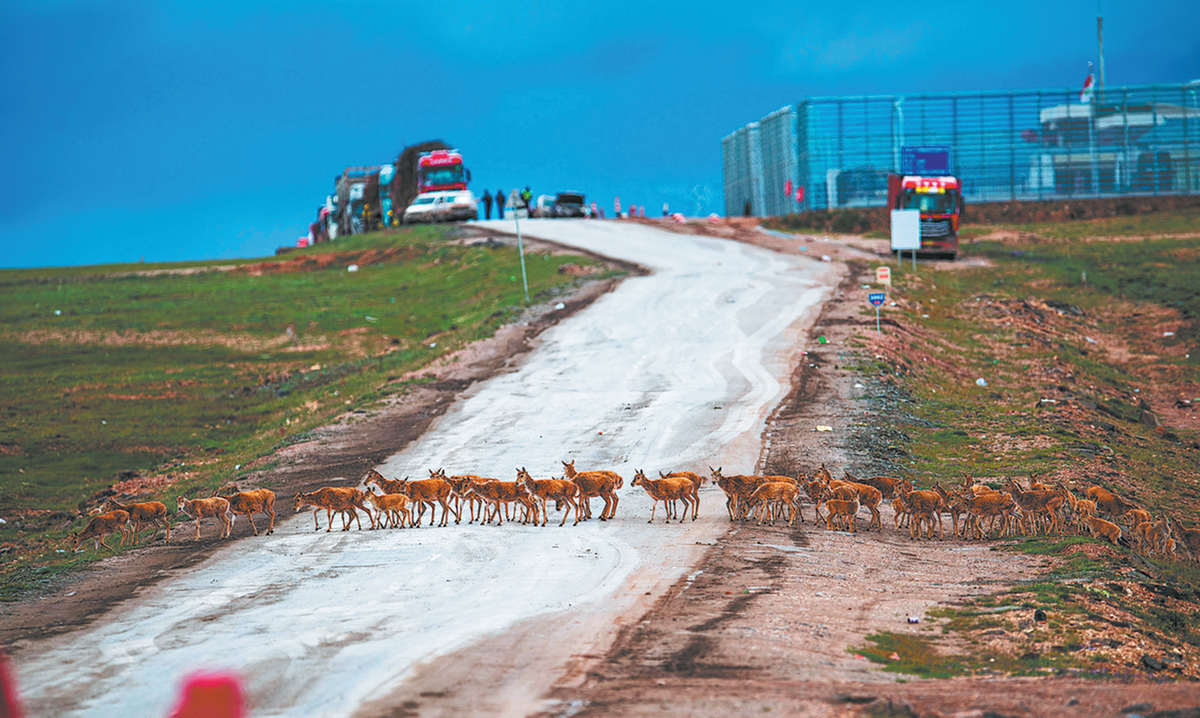
A forum dedicated to roadkill research was held earlier this month in Nanjing, capital of East China's Jiangsu province, attracting academics and experts from across the country to discuss how scientific data gathered from the field can be translated into actionable public policy.
The Forum on Road Safety and Wildlife Conservation was held at Nanjing University's Xianlin campus on Dec 14, and was the culmination of research led by Professor Li Zhongqiu at the university's School of Life Sciences.
The event drew over 60 representatives from 19 universities and research institutes, as well as several environmental and science communication organizations.
It wasn't until the past five years that research into urban roadkill in China really began to gather steam, spearheaded by Li and a team of students and citizen scientists.
It began in 2020 when Li was driving his son to school and spotted a Siberian weasel crossing a street near the university's Xianlin campus. On his return journey, he was dismayed to discover the weasel's still-warm, lifeless body. Struck by the scene, he stopped to document the incident with photos.
This experience opened Li's eyes to the prevalence of roadkill in the megacity of Nanjing.
Despite its frequency, he realized that there was a significant lack of research on the subject within China. Motivated by the gap, Li decided to lead his research team, focused on animal behavior and conservation, in conducting a comprehensive survey of roadkill incidents in Nanjing in 2021. Their efforts culminated in the publication of China's first research paper on urban roadkill in November 2023.
"We planned to expand our research scope, but we quickly recognized our limitations in terms of manpower and data," Li said."This led us to seek support through citizen science."
In late 2023, Li and his team launched a mini-program on the social messaging app WeChat to crowdsource data from the public. In the past two years the initiative has garnered over 8,000 roadkill reports from more than 2,000 contributors nationwide.
By studying roadkill, scientists are able to not only monitor biodiversity and populations, but also identify at-risk species and identify mitigation strategies such as wildlife overpasses, underpasses or biofences.


- Consumer rights protection disputes in new business models surge in Guangzhou
- French vloggers explore highland scenery and Tibetan culture in Yunnan
- Village in Jiangxi gives 100,000 yuan bonus to residents turning 100
- World's leading lab service provider opens China headquarters in Wuxi
- 'Ride to spring' becomes a major tourist attraction in Chongqing
- Lawmakers with disabilities advocate AI and robotics to improve lives





