Top News
Workers weary of Apple's actions
Updated: 2011-02-23 11:32
By Qian Yanfeng (China Daily)


 Twitter
 Facebook
 Myspace
 Yahoo!
 Linkedin
 Mixx
Mixx
The victims said Apple had sent representatives to listen to the demands of the Chinese workers poisoned at United Win Technology, the Taiwan-based company that owns the factory in East China's Suzhou industrial park in Jiangsu province.
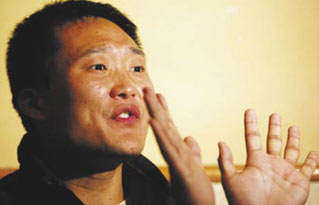
"One man surnamed Wu, who claimed he is an Apple employee, came to us this afternoon and asked about our health conditions as well as our demands," said Hu Jie, one of the 37 victims who kept working at the factory after the poisoning.
"We're glad that Apple is starting to hear our voices," he said. "But we are concerned over whether the company will meet our needs, since the representative didn't set a date for a reply."
Huang Yu'na, a corporate communications manager at Apple China, declined to confirm that the visit took place. Huang told China Daily that the company has no comments beyond those that are included in its supplier responsibility 2011 progress report, which was released on Feb 15.
The maker of iPods, iPhones and iPads acknowledged for the first time in the report that 137 workers at Wintek's Suzhou factory had suffered adverse health effects following their exposure to hexyl hydride, also called n-hexane, a chemical found in cleaning agents used in some manufacturing processes. Use of the chemical -which lasted from May 2008 to August 2009 - was stopped after it began making workers ill.
"This is a killer, a killer that strikes invisibly," said a Chinese-language copy of the letter meant for Apple CEO Steve Jobs that workers showed to Reuters.
N-hexane evaporates faster than alcohol and was used at the factory in order to speed up the production of touch screens for Apple products.
In the wake of the scandal, Apple - which has returned to using alcohol in its manufacturing - has been under public pressure to supervise its suppliers' practices and to exhibit corporate social responsibility by helping the poisoned workers. The company, which announced blockbuster profits in January, has been dogged by criticism of work conditions at its China-based suppliers.
Last year, its main China supplier Foxconn was hit by over a dozen apparent worker suicides that critics blamed on harsh factory conditions.
Despite the reported visit, the workers are complaining that the chemical poisoning could still be harming their health.
"Many of the victims among us have not fully recovered after being hospitalized," said Hu. "We have three things to ask from Apple. One is to give us a formal rewritten apology. The second is to work with its supplier to have an independent third party hospital give us a follow-up medical examination and proper treatment. The third is fair compensation, since our future lives and careers may be affected by this poisoning."
Apple said in its report that a majority of the 137 workers harmed by n-hexane returned to their jobs at the factory after the poisoning. But by Monday, 100 of them had quit after they received their compensation packages ranging in value from 80,000 yuan to 140,000 yuan ($12,152-$21,266).
They also signed exemption agreements, saying the company would not be held responsible if their health worsened in the future. The remaining 37 workers have received from 10,000 yuan to 30,000 yuan in disability benefits.
Some of the workers at Wintek's sprawling plant said the factory-owner had not given enough compensation to affected workers and had pressured those who took compensation to give up their jobs.
"I hope Apple can respect our labor and our dignity. I hope they can stand up and apologize to us," said Jia Jingchuan, a 27-year-old production technician for Wintek who said he fell ill from the n-hexane.
|
|
"We are unable to cope with the medical costs of treatment in the future," said Guo Ruiqiang, a worker at the Wintek plant, who said he was suffering fresh symptoms he blamed on the poisoning. "We can only stay in the factory and see what happens. We just feel very helpless now."
He and other workers said the poisoning caused sweaty hands and feet, sudden numbness in hands, swelling and pain in the feet, tiredness and faintness.
Daily exposure to n-hexane can cause long-term and possibly irreversible nerve damage, said Lam Ching-wan, a chemical pathologist at the University of Hong Kong. According to the US National Library of Medicine, there have been dozens of documented cases where workers suffered nerve and eye damage from exposure to n-hexane.
Workers said they wore protective gear, including masks and goggles, but worked in an enclosed, poorly ventilated space. In its report, Apple said that Wintek had switched to the chemical from alcohol without changing the ventilation system.
Jia, the technician, said that after working for a year on the production for Apple touch screens, he felt there was something wrong, but ignored the problems, blaming them on work stress or moodiness.
Soon he heard other workers were hospitalized and suspected it had something to do with the n-hexane, which managers had said could be safely used.
Jia went to a hospital in Suzhou in August 2009, when doctors told him he had nerve damage. Doctors soon found many of his workmates had similar problems. He stayed for eight months in the hospital. When he returned to work in October 2010, the symptoms of poisoning reappeared, he said.
Reuters contributed to this story.
China Daily
Specials

Kremlin buddies
Dmitry Medvedev and Vladimir Putin inspect Olympic preparations.

Lantern Festival
The Lantern Festival is celebrated across China.

New York Fashion Week
Models line up before a show during New York Fashion Week.