|
|
 |
Large Medium Small |
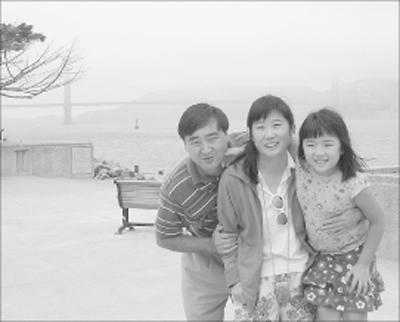
CINCINNATI: Cathy Cao wanted to be a mother, but she had other things to do first and figured that there would be plenty of time for a big family later.
In 1992 she joined her husband in a move from China to the United States, where she pursued a master’s degree and then started her career as a trade specialist in government affairs. By the time her daughter was born, Cao was 34 — a bit older than she would have liked.
“We tried to have a second one, but never did succeed,” said Cao, who lives in Kentucky. “If I could go back in time, I might want to have children earlier. If I were to give my daughter advice, that would be it.”
Cao’s story is typical among Chinese immigrants. Asian-American women, and Chinese- and Japanese-Americans in particular, lead the way in a broader US trend toward childbearing later in life.
Among all races, women of Asian descent had the oldest average age at first birth, 28.5 years, according to a report released in August by the National Center for Health Statistics. That compared with an overall average age of 25 for first-time mothers, with the youngest first-time mothers being American Indian or Alaska Native women, at 21.9 years.
Situations such as Cao’s, in which people choose to complete secondary educational programs first and try for children later, are among the most common reasons Asian-American women are having children later in life.
“They definitely tend to limit childbirth until their education is complete or nearly complete,” said Larry Hajime Shinagawa, director of the Asian American Studies Program at the University of Maryland. “They tend to be very intentional and very rational in how they plan their lives.”
Some women come to the US to pursue restaurant or other service work, he said, but the pattern is the same in that they postpone childbearing in pursuit of stable family economics.
Another factor that plays into delayed childbearing of Chinese-Americans is the fact that many immigrants want to keep open the option of returning to China to raise a family.
“They’re often not absolutely convinced that they’re going to stay here (in the US),” Shinagawa said. “They know they will feel more obligated to stay if they start the process of raising a child here. As opposed to those who may come from places such as rural Mexico or the Dominican Republic that don’t give them many choices economically, a lot of Chinese are still in a position to go back and see what the options are.”
With an average age at first birth of 30.1 years, women in the US of Chinese descent trailed only those of Japanese heritage, who have their first child at an average age of 30.6, according to a 2002 report released by the CDC’s Division of Vital Statistics. The trend appears to hold largely true today, Shinagawa said, and reflects a jump in numbers over the last two decades.
In 1990, the average age for first birth among Asian or Pacific Islander women was 26.8, which was already the highest among all racial and ethnic categories. That same year the average age of first birth for women overall was 21.4 years.
Cao and her husband have accomplished their goal of building a financially secure life for their family. They love raising their daughter, who is now 10.
But delayed childbearing has its disadvantages even beyond the fact that the family didn’t have the second child they desired. That becomes clear every time she meets the parents of her daughter’s friends. They’re usually younger and, Cao feels, have more energy and endurance. She figures the ideal age for first birth is between 25 and 30. And it’s best not to assume it will be easy; it took Cao three years to conceive.
Yang Li, a biomedical researcher in Cincinnati, who is 34 and has a 2-year-old son, is not convinced it’s so bad to wait. Her career path (and success) would hardly have allowed her to do otherwise. Yang and her husband both pursued higher education degrees and worked before having children.
“We didn’t know where we would end up,” she said. “We thought we should be stable, with relatively good finances before we had a child. I think things have turned out fine this way.”
The couple, who now have permanent US residency, sometimes talk about having another child, but haven’t decided yet. Given her medical background, Yang is well aware of the increased risks that come with bearing children beyond age 35. Complications such as gestational diabetes, high blood pressure and premature birth are more common, and the child has a higher chance of certain birth defects. Conceiving the child in the first place can be substantially more difficult, because fertility declines with age. And the rate of miscarriages is higher than in younger women.
Nonetheless, in the US, one of every 12 women giving birth for the first time is over age 35, according to the latest National Center for Health Statistics data. In 1970 the figure was one in 100.
In China, income and education levels are also increasing, leading some women, especially in urban areas, to wait until well into their 30s to start families. Most of Yang’s friends in China, as well as in the US, waited about as long as she did to have a child, having chosen to get their careers established first.
When a woman has her first child often affects the number of children she has overall. In the US, among women in the 40 to 44 age range, Asian-Americans have the lowest number of children — an average of 1.7, according to an August 2008 report from the US Census Bureau. That’s compared to 1.9 for the general population. But in the same age category, only 18 percent of Asian-Americans have no children, compared with 20 percent of the general population, according to the Census Bureau, perhaps reflecting a trend toward more single-child households.
“It’s not just delaying childbirth,” said Hans Johnson, associate director of the Public Policy Institute of California. “It’s a matter of having fewer children overall.”
American-born Asians, according to Johnson, have some of the lowest fertility rates in the world, at about 1.4 children per woman.
Shau Zavon also waited until her 30s to start a family. She has two daughters and a son, and works in real estate.
“I started my family when it was not too early and not too late,” said Zavon, who is president of the Greater Cincinnati Chinese Chamber of Commerce. “Just as they’re getting a little older, I’m really focused and I’m building my career. Kids and a career don’t necessarily have to be a conflict.”
Wang Meiyi, 30, was once engaged but she and her boyfriend broke up three months before their planned wedding. As a result, Wang shifted her priorities. She has just started a graduate program in educational leadership in Ohio.
“I realized that I needed to do something more with my life and my career, rather than only focus on family,” Wang said. “I still think marriage would be a good thing, something that would make my life more complete. I just haven’t met the right one for me. And I don’t have a deadline for myself.”
All of this has her parents back in China, who are anxious to see her with a husband and a child, quite worried. They’ve even tried to play matchmaker for their only child, but to no avail.
“I can’t just get married to please my parents,” Wang said. “When they talk about it, I just change the subject. As long as I live here, the pressure is a little bit less.”
But some view that pressure in a different light. When Cao was getting her education and career in order in the US, her family supported her decision to wait to have a baby.
“They didn’t criticize me,” she said. “Now I kind of wish they had pressured me a little more.”