Illicit fertility clinics target top students
Updated: 2015-01-07 07:37
By Yang Wanli(China Daily USA)
|
||||||||


Illegal human fertilization agencies in China are expanding their services to students in well-known universities, looking for donated eggs from beautiful female students with high intelligence.
At a surrogacy agency in Shanghai called International Surrogacy Center, a woman surnamed Zhang in the customer-service department said they are looking for girls to donate eggs, and that donors will receive 6,000 to 8,000 yuan ($865 to $1,287). The payment is referred to as "a subsidy for nutrition".
"Egg donation is not harmful to health, and donors are helping couples who cannot have their own baby for some reason. It is a win-win cooperation," she said. "The health check and egg collection will be done in public hospitals."
Enforcement of prohibitions against such activities arises only if a case leads to a dispute.
According to Zhang, most clients require donors who are taller than 160 centimeters and prefer light skin.
"Donors' information will be collected confidentially," she added.
Although Zhang claimed the agency has three years' experience of surrogacy services as well as egg and sperm donation, and even has its own clinics, it does not guarantee donors' safety. Additionally, donors - who do not sign a contract-have no grounds for complaint if anything goes wrong.
In Beijing, a black market for collecting eggs from female students in renowned universities also exists. Clients usually pay the agency 40,000 to 80,000 yuan, but donors see little of the money because most of it is deducted by the agencies, according to Beijing News.
Agencies post advertisements on the street or on the online bulletin board systems of universities. Online messenger is the main communication tool between agencies and donors. Clients usually ask to meet the donors before the egg donation. If donations are done on the black market, donors have no legal protection.
The National Health and Family Planning Commission released a regulation in 2006 that only allows women who are to have in vitro fertilization themselves to donate redundant eggs.
Under Chinese law, eggs from one donor can be provided to a maximum of five married women; single women are not eligible.

 Massachusetts opens 1795 time capsule
 CA high-speed rail breaks ground
 What tough times await the 'sheep leaders'
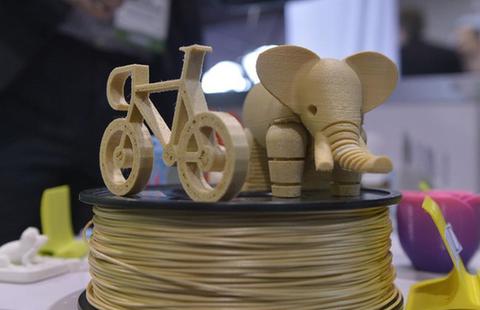 3D printing at 2015 Intl Consumer Electronics Show
 Winter storm freezes US
 Giraffes, elegant dancers
 Memory of stampede victims honored on 7th day
 Russian airline stewardess flying over China
Most Viewed
Editor's Picks

|

|


|

|
|

|
Today's Top News
US 'disappointed' over Taiwan flag-raising
CA high-speed rail breaks ground
John Boehner re-elected as Speaker of the US House of Representatives
Gunman shoots one person, kills himself in Texas
Lenovo wants larger US share
Analysts look for 7% GDP growth in China
Two New York policemen shot after armed robbery
US stands by plan to pull troops from Afghanistan
US Weekly

|

|