The accidental art curator
Updated: 2015-11-14 00:07
By ZHANG KUN in Shanghai(China Daily USA)
|
||||||||


 |
|
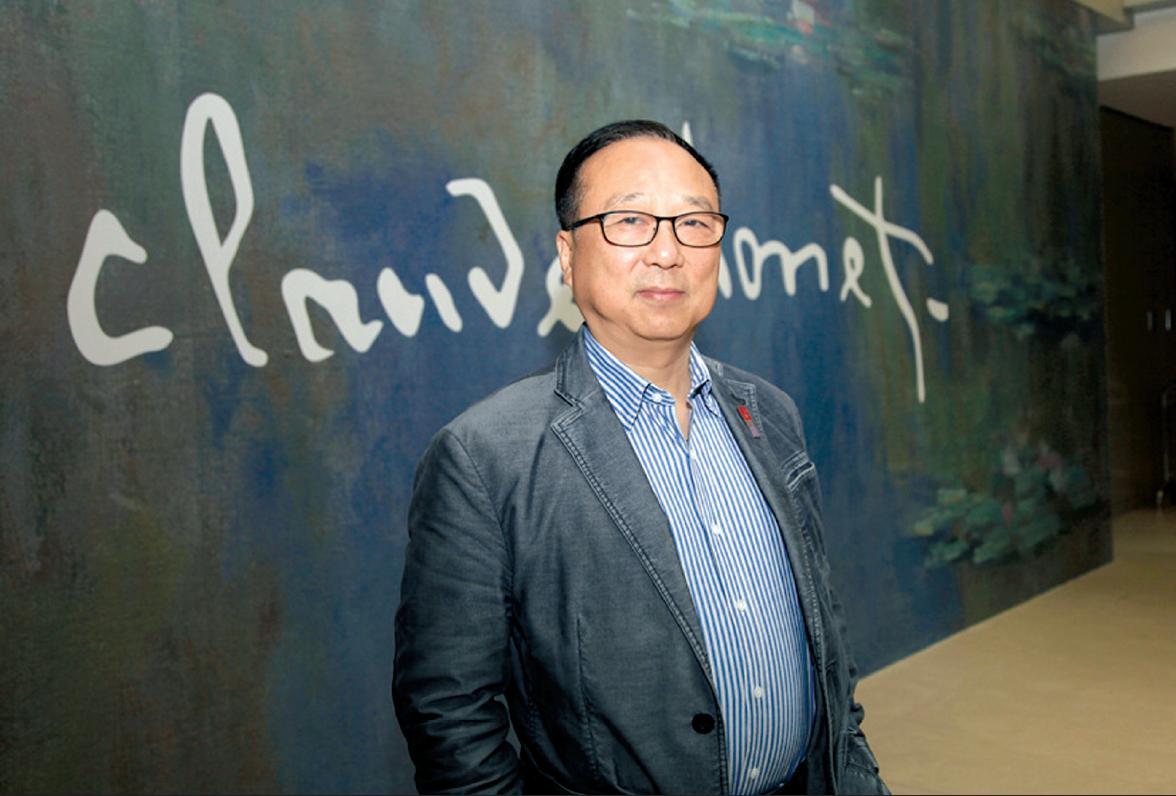
Xie Dingwei founded Tix Media in 2011 for the sole purpose of showcasing artworks of Pablo Picasso, but the company has since gone on to hold many more art exhibitions. provided to china daily |
For more than 20 years, Xie Dingwei was an electronics engineer in the United States. He had worked in Silicon Valley, considered to be the world’s tech mecca, and was highly experienced in the electronic and semi-conductor industries. While he used to specialize in handling digital, analog integrated circuits and cutting-edge technologies on finger print analysis, Xie now runs his own company that is, strangely, from a completely different industry.
Founded by Xie in 2011, Tix Media is a company that is dedicated to introducing Western artworks to China and it has organized showcases featuring masterpieces by great artists such as Pablo Picasso, Claude Monet and Salvadore Dali.
Xie’s decision to change careers could perhaps be traced back to his family. After all, his late father Xie Zhiliu (1910-1997) is recognized as one of the top painters and connoisseurs of traditional Chinese art. His mother, Chen Peiqiu, also a painter, was renowned for her efforts in authenticating antique Chinese paintings. The latter, who is now in her nineties, is still actively creating art. Both father and mother are ranked among the most respected ink artists of the 20th century in China.
Surprisingly, Xie’s mother was against her children taking up art as a profession because becoming an artist didn’t seem like a viable career choice back then.
“My parents had gone through a series of political turmoil, and they were severely impacted every time as they were artists,” Xie said. “Until the 1980s when China opened up to the world, there had never been an effective market for art. My parents’ paintings were mostly given to friends as gifts. By late 70s, their paintings were sold through the state-owned antiques store to overseas, because China was in urgent need of foreign currency at that time.”
As a result, Xie ended up studying engineering. He left for the US to further his studies in 1981, returning only in 2005 when he wanted to let his children experience the Chinese culture as well. Xie first worked as a freelance engineering consultant and his foray into the arts scene only came when he was asked to help put together an exhibition of his father’s works.
He has never looked back since. Next year, Xie will help to launch a new museum in Lingang New Town that is dedicated to his parents’ artworks.
The decision to set up Tix Media was largely due to a golden opportunity to host the illustrious works of Pablo Picasso. Musee Picasso, a museum in Paris dedicated to the work of the Spanish artist, had closed for renovation in 2010. In an attempt to raise more funds for the cause, the museum took a large number of paintings from its collection and embarked on an international tour.
When the tour reached Asia, Xie was presented with the chance to promote the show, and he gladly obliged. With the help of investments from a friend in the real estate industry, they founded Tix Media just to present the Picasso show in China. The exhibition was held at the China Pavilion of the 2010 Shanghai World Expo from Oct 18, 2011 to Jan 10, 2012.
Till today, the exhibition has the honor of being the largest and longest showcase of Picasso’s works in China. However, the project was unprofitable.
As the total value of these masterpieces amounted to a staggering 6 billion yuan ($937.66 million), the subsequent loan fee, transportation and insurance costs were naturally exorbitant. Furthermore, according to regulations on public cultural establishments, tickets to special exhibitions cannot cost more than 20 yuan.
To get around this, Tix Media had to rent the exhibition space at the China Pavilion of the 2010 Shanghai World Expo before they could set the prices of their own tickets, which ended up being 80 yuan on a week day and 120 yuan on weekends. The rental fees, together with the set up cost, made the Picasso exhibition an extremely expensive investment that failed to pay dividends.
However, the problems made for a good learning experience for Xie.
In 2014, the K11 Art Mall on Huaihai Road Middle fortuitously offered its museum space to Xie for free when they found out he was planning an exhibition of works by French Impressionist artist Claude Monet. Because the gallery was located in the basement of what is essentially a shopping mall, Xie faced much difficulty in convincing the Paris Marmottan Monet Museum that the location was good enough for an exhibition of that magnitude.
“Had I been an artistic major, I would probably have not been able to make it happen,” he said, “But I was an engineer and we were trained to solve all kinds of problems.”
Xie’s efforts eventually paid off and the exhibition turned out to be the most successful art show in Shanghai, drawing close to 400,000 visitors. The art industry was so encouraged by the success that a series of exhibitions celebrating the works of artists such as Van Gogh and Joan Miro soon took place across Shanghai.
Between Nov 20 and Mar 6, 2016, Tix Media will be presenting an exhibition of works by Pierre-Auguste Renoir. The event will feature more than 40 paintings that have been loaned from 14 museums and galleries across Europe and North America.
“My ambition is to bring the works of great artists to the Chinese public,” Xie said. “As long as Tix Media can make ends meet, we will carry on with this work.”
- Valletta summit enhances political will to solve migration crisis amid concerns about EU consolidation
- S Korean court upholds life sentence for ferry captain
- China, US prepare for dialogue to fight cybercrime
- Myanmar's opposition to independently form government
- Obama signs executive order on lifting sanctions against Liberia
- Reputed New York mobster, 80, cleared in 1978 'Goodfellas' heist
 Top 10 regions that led the shopping spree on Singles Day
 Traditional Yuju Opera faces dilemma
 Eat more beans, peas, lentils and chickpeas, UN says
 Veterans Day marked across the United States
 Antalya: Beautiful place where G20 will be held
 Interesting trends revealed by Singles Day
 10 delicious soups you can't miss in cold winter days
 Xi-Ma meeting lauded in US
Most Viewed
Editor's Picks

|

|


|
|

|
|
Today's Top News
Obama, Netanyahu at White House seek to mend US-Israel ties
China, not Canada, is top US trade partner
Tu first Chinese to win Nobel Prize in Medicine
Huntsman says Sino-US relationship needs common goals
Xi pledges $2 billion to help developing countries
Young people from US look forward to Xi's state visit: Survey
US to accept more refugees than planned
Li calls on State-owned firms to tap more global markets
US Weekly
|

|