The enigma that was ‘Vinegar Joe’
Updated: 2015-09-06 04:15
By Zhao Xu(CHINA WATCH)
|
||||||||


 |
|
General 'Vinegar Joe' Joseph Warren Stilwell(left). PROVIDED TO CHINA DAILY |
Nearly 70 years after his death, U.S. Army General Joseph Warren Stilwell remains a powerful symbol of the U.S. support for China’s wartime struggle against Japan.
Yet the man who commanded U.S. forces in the China-Burma-India (CBI) theater during World War II remains an enigma: To some the acid-tongued “Vinegar Joe,” to others a caring “Uncle Joe.”
“With General Stilwell, no one should draw easy conclusions,” said his grandson, John Easterbrook, who visited Beijing last year for a photo exhibition on the wartime collaboration between China and the U.S.
Stilwell took charge of the U.S. Army in the CBI in early 1942. “Compared with the ‘main’ battlegrounds in Europe and Africa, the CBI was severely lacking in resources, both men and equipment,” John Easterbrook said.
The commander, who was also chief of staff to Chiang Kai-shek, leader of the Kuomintang (KMT), eventually led the 1944 campaign that helped lay the foundation for the Japanese defeat in China.
His grandson said the hard-won success was in part due to Stilwell’s long association with the Chinese people. Before his CBI mission, he had been in China from 1920 to 1923 as the U.S. Army’s first Chinese-language student, and also worked as chief engineer on a famine-relief road in Shanxi province.
“Working and living with (ordinary people) … gave him profound knowledge of the Chinese people,” Easterbrook said, adding that his grandfather, who spoke fluent Mandarin, returned to China for three more years in 1926, and then again in 1935.
In July 1937, while he was serving as military attache in a U.S. delegation to Beijing, fighting broke out between the KMT and the Japanese in southwest Beijing, marking the start of the eight-year War of Resistance Against Japanese Aggression.
According to historian Ge Shuya, the criticism Stilwell received both in life and death — he was condemned for being too harsh on U.S. soldiers — can partly be explained by his determination to win the hearts and minds of the Chinese soldiers.
“General Stilwell understood the Chinese mentality well enough to know that, to become the true leader, he would have to fight alongside them and demonstrate a high level of fairness, which he did,” he said.
The commander also made the controversial decision to construct the Ledo Road between 1943 and 1944 to link Kunming with Assam in India and reopen China’s overland supply route, which had been cut by the Japanese in early 1942.
“The road was officially opened in January 1945, seven months before the Japanese surrender,” Ge said. “But in the process of forcing this route through northern Burma, Stilwell helped to train and equip 30 Chinese divisions, many of which later fought the Japanese elsewhere.”
By the time the route opened, the general had been recalled to the U.S. by President Franklin D. Roosevelt. Easterbrook said when his grandfather arrived home he was told not to talk to reporters due to his criticism of the corruption in the KMT. Many observers believe the antagonism between Stilwell and Chiang was responsible for his recall.
U.S. Army veteran Bernard Martin, 93, who attended the photo exhibition in Beijing, said: “General Stilwell was a very hard commander, but it took a leader like him to push us hard to get the job done. Yesterday, we all hated him; today, I revere the man.”
Ge believes that feeling is typical of people who knew Stilwell: “The Chinese veterans who fought under Stilwell … remembered that he was one of them.”
Before he left China for the last time, Stilwell wrote his subordinate, Pan Yukun, commander of the 50th Division of the Chinese Expeditionary Forces, to say: “I hope you will forget any misunderstandings and clashes of opinion we may have had, and think of me as your friend, and a friend of China.”
Yang Wanli contributed to this story.
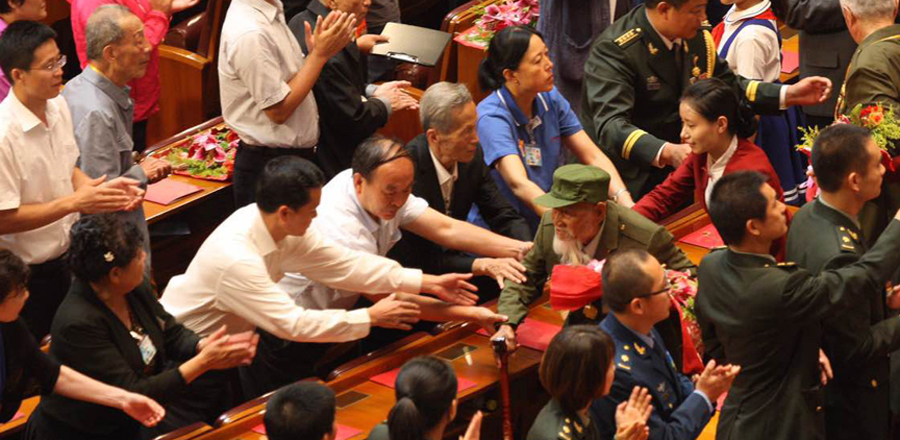
 Veterans attend V-Day anniversary gala show
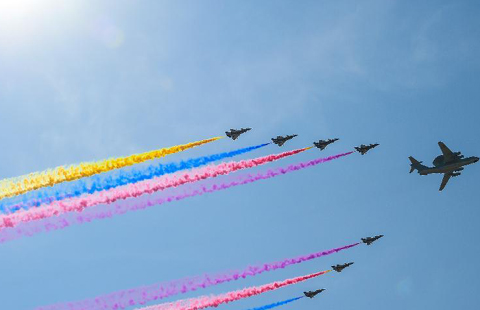 Military helicopters write number 70 high in the sky
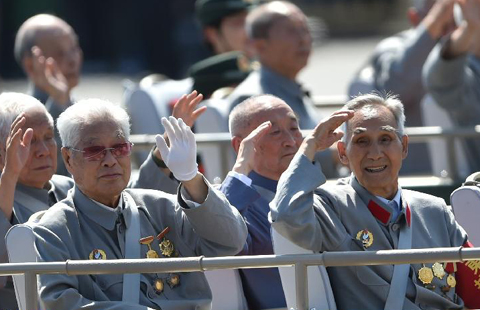 Salute to veterans
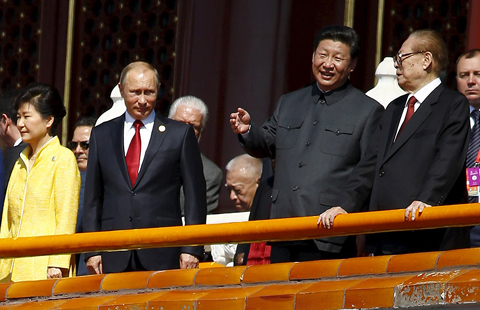 Xi attends the ceremony with other leaders
 Armored vehicles roll down the parade in huge roar
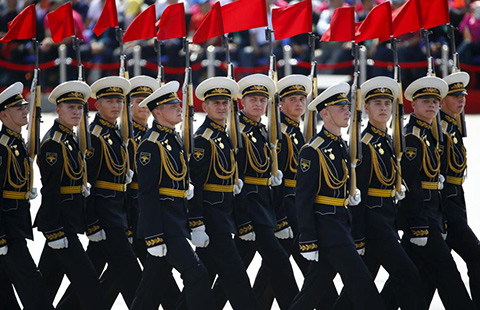 Foreign troops celebrate with Chinese comrades
 Red carpet ceremony for first grade kids
 Kashgar old city in Xinjiang is well preserved
Most Viewed
Editor's Picks
|
|


|
|
|

|
Today's Top News
Sino-Russian investment fund eyes more deals
Predicting Internet's future without a crystal ball
Silk Road Fund to expand ties with lenders
Intl community echoes Xi's speech at V-Day commemoration
Envoy hails New York resolutions
Nation's military power grows but still trails behind
China to cut troops by 300,000: President Xi
Springfield gets Chinese railcar plant
US Weekly

|

|