China and the missing knowledge link
Updated: 2012-11-03 15:39
By Diao Ying (China Daily)
|
||||||||


A British fund manager says he and his colleagues cash in on widespread ignorance
|
|
| Philip Ehrmann |
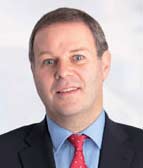
The time difference enables Ehrmann, manager of Jupiter China Fund in London, to get an idea of what has been happening in China without being hit by any sudden, unpleasant surprises. He does not panic, he says, or if he does, he panics "in an organized way".
His mutual fund manages assets worth 153 million pounds ($243.9 million) for which China is the focus.
Now is probably not the ideal time for investors to be looking at China, he says. The benchmark Shanghai Composite index fell below 2,000 points in September, almost a 12-year low; Chinese companies listed in the US are going through rough times; and economic growth in China has slowed several quarters in a row.
However, Ehrmann, 51, a fund manager for 30 years, says things are not that bad. Switching from an export-led economy to one that goes down new growth paths will not be painless, he says, but new industries and new technologies will transform how things are done in China, and this process will create great opportunities.
Ehrmann, sitting casually dressed in his London office, talks about his views of the Chinese economy and his decades of investing in the country.
His strategy is growth-oriented, "looking into the future", he says. He spends time looking at growth industries that are not reflected in the economy as they should be.
"It is possible for us to operate in a world where part of the stock market is not performing. Everything is being depressed. There are areas where things look good, but their value has not worked its way through the stock market yet."
Ehrmann says his first encounter with China came about by chance 15 years ago, when he was studying emerging markets. How much was going on in China came as a surprise, and few people outside the country knew about it, he says. He reckons it is still very much the same today.
"There is an information gap between what people know and what is happening in China, and me and my investors are looking to profit from that information gap."
For example, when Google and Facebook were monetized they gained worldwide attention, yet in China there are Internet companies with huge customer bases and ever larger turnover. "When people talk about Google, there are Chinese companies like Baidu and Sina which are quietly making progress."
Ehrmann started his career in 1982 focusing on growth companies on the US West Coast. He says he sees many similarities between the US then and China now, including industrialization, urbanization and environmental problems. People began to grapple with pollution issues and deal with air quality and waste management, he says.
"The changes happening in China now are equally dramatic, but unprecedented in terms of speed and scale."
Tencent, the Chinese Internet company, has been near the top of his portfolio since 1999 and 2000, near the end of the dotcom bubble, when he and his colleagues began to look at what the Internet would mean to China.
Tencent, which in those days was essentially a paging service, has grown into one of the country's biggest Internet companies.

 Relief reaches isolated village
 Rainfall poses new threats to quake-hit region
 Funerals begin for Boston bombing victims
 Quake takeaway from China's Air Force
 Obama celebrates young inventors at science fair
 Earth Day marked around the world
 Volunteer team helping students find sense of normalcy
 Ethnic groups quick to join rescue efforts
Most Viewed
Editor's Picks

|
|


|

|

|

|
Today's Top News
Health new priority for quake zone
Xi meets US top military officer
Japan's boats driven out of Diaoyu
China mulls online shopping legislation
Bird flu death toll rises to 22
Putin appoints new ambassador to China
Japanese ships blocked from Diaoyu Islands
Inspired by Guan, more Chinese pick up golf
US Weekly

|

|