Captivating characters
Updated: 2012-08-14 07:57
By Mei Jia (China Daily)
|
||||||||


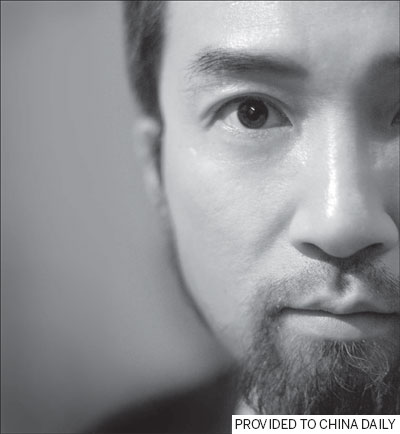
Hailed as one of the country's best children's picture book creators, Xiong Liang shares his inspirations with Mei Jia.
Author Xiong Liang says every time he hosts a reading club or book release, it goes on for longer than he expects. Besides playing games and reading books with the children, the author of picture books will also draw for every kid, on demand. With just a few strokes of his pen, he brings alive pandas, horses, butterflies and dinosaurs. Yet during an interview at his studio in Yizhuang, in Beijing's southeastern suburb, Xiong says he is not good with children.
"I try to remember how I felt as a child, about what I felt was interesting or what I felt was dull. And I try to convey those feelings through my works," the 37-year-old author says. His thick mustache moves as he speaks at a fast speed.
Hailed as one of the country's best picture book creators, Xiong is known for his signature ink-and-wash styled illustrations and Chinese traits in his stories.
Xiong has gained a reputation in the country's book market that has been dominated by translated picture books. Almost all of his 20-odd works have been published globally in multiple languages.
Xiong says the theme in children's literature is too narrow.
"From ancient times till now, the stories preach ethics and values of a competitive society based on the subject of examination," he says. "(By reading these books), children tend to value gain and loss too much and forget about seeking happiness."
He bases his creations on what he believes are core values for children - to be happy and to echo universal humanity.
His books are filled with characters and elements from Chinese tales and culture, like the Kitchen God who governs culinary affairs and the stone lion that guards door, which are well accepted and loved in China.
"I create things that interest me, that convey my views as an artist," he says.
Born in Zhejiang province in 1975, Xiong has always had a rebellious streak. He says he's lucky that his parents started him on ink painting lessons since he was 5. His parents even converted an attic into a drawing room for him to develop his talent.
To explore life, Xiong went to Guangdong province after high school, joining the first generation of migrant workers there. He began his career designing homeware and holiday gifts at a foreign trade company, before starting his own business.
In 2001, one of his children's stories was published - thanks to his brother Xiong Lei, who was already an established children's book writer then. Xiong Liang realized that his calling in life was writing when his book received overwhelming success. He decided to fold his 10-year-old business and write full time.
But he only realized by chance that he had the gift to illustrate his thoughts in pictures. He was creating some reading materials for his daughter Tiantian, when he decided to draw pictures to go with his writing.
And he found the process delightful.
His years in foreign trade proved useful. He got access to lots of foreign picture books, which enlightened him.
Xiong's works are considered the model of Chinese picture books. Because he wrote and illustrated his books himself, while previous writers had to work with an artist.
Sharing the flow of his work, Xiong says he works like a drama director.
"First, I come up with a story idea. Then I leave it there for two or three years. During the interval, I tell the story many times to my friends. When the story is established as an orally transmitted fable, I begin to draw and write."
Xiong says although he contemplates for a long time before putting his stories onto paper, the moment he starts writing and drawing, it's smooth sailing.
"Confidence in oneself is the key that separates one from the crowd who are over loaded with information and choices," he adds.
Xiong tries different drawing styles in his different works, but his ink-and-wash style is the most prominent.
"I didn't choose ink-and-wash because it's a Chinese art form, I choose it because it's black and white, which sends out a slightly dark message, like heavy metal music."
His recent work, The Plum Rain Fairy, hints of the dark side he spoke about.
Xiong believes that Chinese picture books are still in their infancy. He says to develop the industry, he plans to train and inspire more picture book editors, bringing along with him his experiences working with foreigners.
Contact the writer at meijia@chinadaily.com.cn.
(China Daily 08/14/2012 page19)
 Relief reaches isolated village
 Rainfall poses new threats to quake-hit region
 Funerals begin for Boston bombing victims
 Quake takeaway from China's Air Force
 Obama celebrates young inventors at science fair
 Earth Day marked around the world
 Volunteer team helping students find sense of normalcy
 Ethnic groups quick to join rescue efforts
Most Viewed
Editor's Picks

|
|


|

|

|

|
Today's Top News
Health new priority for quake zone
Xi meets US top military officer
Japan's boats driven out of Diaoyu
China mulls online shopping legislation
Bird flu death toll rises to 22
Putin appoints new ambassador to China
Japanese ships blocked from Diaoyu Islands
Inspired by Guan, more Chinese pick up golf
US Weekly

|
|