Q & A
Updated: 2012-08-20 08:04
By Wu Sike (China Daily)
|
||||||||


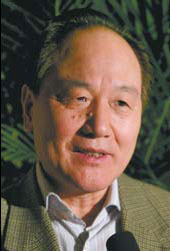
Editor's note:
Wu Sike, China's Middle East envoy, talked to China Daily about the Syrian crisis and efforts to resolve it.The inaugural round of dialogue on Middle East affairs between China and the US was held in Beijing on Aug 14. But differences in opinion remain deep between the two sides over Syria. Will such a mechanism help solve the disagreements?
Disagreements indeed exist between China and the United States over Syria. Primarily, China insists on respect for Syrian sovereignty and a political resolution through dialogues, while the US wants the current president to step down as a condition and is supporting the opposition through various ways.
But such differences don't affect bilateral communication between China and the US.
The UN Syria Observer's mission ends on Sunday and will be replaced by a UN liaison office. How do you see this affecting the future of Syria?
The office as a UN presence is a hope for a political resolution to the Syrian crisis. But if it doesn't want to repeat the fate of the observer mission, the international community has to be more united and assert more support for the UN's mediation efforts.
Egyptian news agency MENA reported that President Mohamed Morsi will attend the Non-Aligned Movement Summit in Teheran later this month. It will be the first visit paid by an Egyptian head of state to Iran since the Islamic revolution in 1979. What kind of impact on the region do you think his visit will have?
During the absence of diplomatic ties, the two important countries in the Middle East region have maintained contacts, but Egypt, considering Washington's reaction, hasn't normalized ties with Iran since Hosni Mubarak's administration was ousted.
If this visit turns out as a successful one, I believe the regional stability will be strengthened and the new Egyptian leadership will make more breakthroughs in diplomacy.
How do you view the role that China plays in mediating Middle Eastern affairs?
China keeps good relations with countries in the Middle East region and constantly promotes political dialogues to solve the regional issues, which usually have an international influence.
While most of the issues can hardly be solved overnight, China always supports anything that benefits bilateral ties and stability in the region.
China Daily
(China Daily 08/20/2012 page12)
 Relief reaches isolated village
 Rainfall poses new threats to quake-hit region
 Funerals begin for Boston bombing victims
 Quake takeaway from China's Air Force
 Obama celebrates young inventors at science fair
 Earth Day marked around the world
 Volunteer team helping students find sense of normalcy
 Ethnic groups quick to join rescue efforts
Most Viewed
Editor's Picks

|

|


|

|

|
|
Today's Top News
Health new priority for quake zone
Xi meets US top military officer
Japan's boats driven out of Diaoyu
China mulls online shopping legislation
Bird flu death toll rises to 22
Putin appoints new ambassador to China
Japanese ships blocked from Diaoyu Islands
Inspired by Guan, more Chinese pick up golf
US Weekly

|

|