From the Chinese Press
Updated: 2012-08-21 08:04
(China Daily)
|
||||||||


Minors sent shockwaves on Net
An 11-year-old boy in Wusheng, Sichuan province, reportedly posted nude photographs of his 10-year-old online "friend" after failing to extort 100 QQ coins, a kind of virtual currency, from her. He had taken the photographs while chatting with her on QQ group and micro blog. The incident exposes not only the serious lack of parental supervision, but also the disturbing facts of cyberspace, says an article on gmw.cn. Excerpts:
It is horrifying to know that children take off their clothes while chatting online and then one of them blackmails the other. The absence of the boy's father from home and the ignorance of his under-educated mother about the dangers of the Internet led to this shocking incident. His family has failed to teach him to distinguish right from wrong.
Family education is very important for a child, because a child's future is influenced most by its family. If parents don't give proper guidance and moral education, minors are likely to indulge in activities that are totally unbecoming of them, especially in these days of the Internet. Children tend to see the world differently if parents fail to inculcate the right values in them.
The girl, too, should be taught about right and wrong. Her parents have to warn her of the dangers of the Internet.
The incident shows that the evil side of cyberspace has penetrated the lives of even minors and resulted in the premature death of innocence.
Parents should be alert and keep a strict eye on their children to prevent Wusheng like incidents.
Risks of weeding out speculators
Speculators in the housing sector from Wenzhou, Zhejiang province, are likely to be weeded out of the market by the ongoing changes in housing regulations. But close attention needs to be paid for a possible chain effect, says an article in Guangzhou Daily. Excerpts:
As a dominating force in the real estate market for the past 10 years, speculators from Wenzhou have played a leading role in creating the housing bubble. If these speculators can be weeded out of the market, it will be a milestone in the government's efforts to restore optimism in the market and cool the overheating economy.
But it's necessary to be alert against any possible financial risks that could be triggered by the huge losses these speculators suffer when they are forced out of the market.
The speculators' capital structure shows 70 percent of their funds come from borrowings, including bank loans and private loans with usurious interest rates. In fact, more than 50 percent of their funds are borrowed by mortgaging houses. Such a weak capital chain and the strict rules the government has imposed have already forced some speculators into insolvency.
This year, many speculators from Wenzhou have defaulted on their loans, increasing the rate of non-performing loans for local banks. The rate was 2.69 percent at the end of June, more than seven times that in the same month last year.
If the market for speculative funds collapses, it could increase the security risks of banks that give housing loans, which is about 11.32 trillion yuan ($1.78 trillion) across the country.
As the pressure of economic slowdown increases, a sluggish housing market will ultimately harm the entire financial industry. So supervisory authorities and commercial banks both should take steps to minimize the risks.
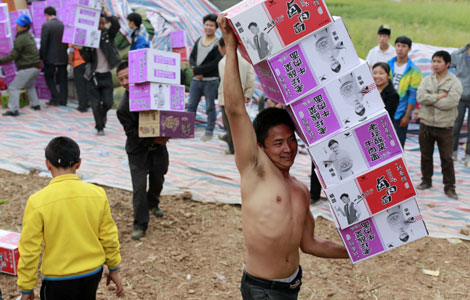
 Relief reaches isolated village
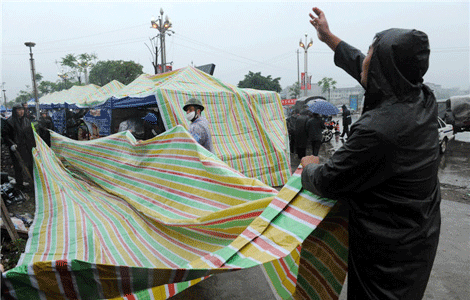 Rainfall poses new threats to quake-hit region
 Funerals begin for Boston bombing victims
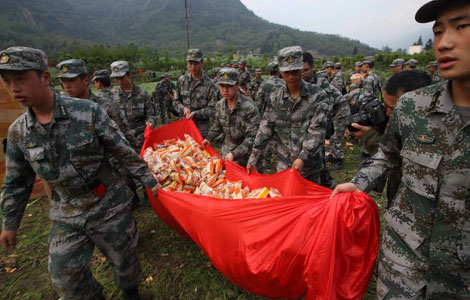 Quake takeaway from China's Air Force
 Obama celebrates young inventors at science fair
 Earth Day marked around the world
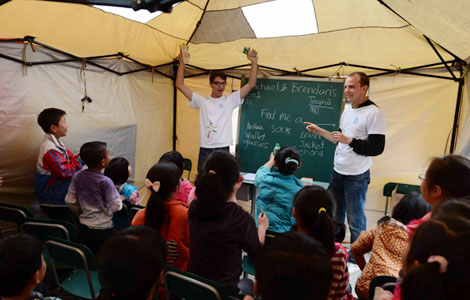 Volunteer team helping students find sense of normalcy
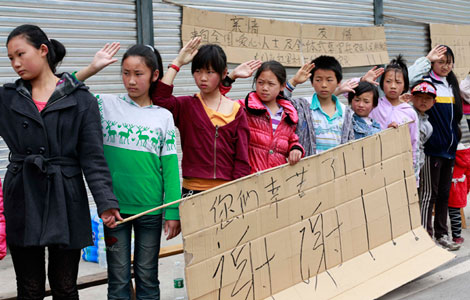 Ethnic groups quick to join rescue efforts
Most Viewed
Editor's Picks
|
|


|

|

|

|
Today's Top News
Health new priority for quake zone
Xi meets US top military officer
Japan's boats driven out of Diaoyu
China mulls online shopping legislation
Bird flu death toll rises to 22
Putin appoints new ambassador to China
Japanese ships blocked from Diaoyu Islands
Inspired by Guan, more Chinese pick up golf
US Weekly

|

|