The future of classical music
Updated: 2012-08-27 08:11
By Raymond Zhou in Bratislava, Slovakia (China Daily)
|
||||||||


|
Violinist John Harding, from New South Wales, is familiar with the music scene in the Asia-Pacific region. |
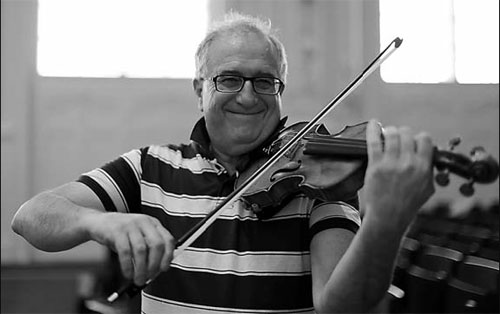
"Asia Pacific is the future for classical music. The sheer number of people who study it and the good ones who come out of conservatories, especially those in violin and piano, are astounding," says John Harding, who was born in New South Wales, but has spent a cumulative two dozen years in the Asia-Pacific region. He is extremely familiar with the music scene in Hong Kong and Macao, having founded the violin department of The Hong Kong Academy for Performing Arts.
Harding, an accomplished violinist, is especially impressed with the progress China has made in the past three decades. He still remembers vividly his first trip to the mainland in the early 1980s. He and a few colleagues visited Guangzhou's Xinghai Music Conservatory. "There were not many instruments, and the facilities were minimal. But the students were eager to learn."
As he recalls, in the old days Asian students tended to be "sucked away as if by a vacuum cleaner" by prospects in the West after they studied there. But nowadays, "they want to come back to their birth countries, pulled by their culture and history".
Harding sees no difference according to the racial or national background of a musician. "Maybe 50 years ago," he says, "you could tell apart a Viennese style and a Russian style of violin playing. But now it is so easy to get around the world, so Asian musicians can be just as idiomatic as Europeans." He jokes that you don't hear the sound of the erhu, a Chinese string instrument, in a Chinese playing violin.
He cites the Shanghai String Quartet as an example of "refined and sophisticated" music making. And "fantastic concert halls in cities like Beijing, Shanghai and Guangzhou" are very familiar to him.
Harding, who is concertmaster for the European tour of the Asia-Pacific United Orchestra, sees it as an opportunity to "show Europe that Asia is now producing a large quantity of good musicians". As for the ad hoc nature of the orchestra, he says that any time people from different countries - and 27 orchestras - come together, it's got to be constructive.
It is a happy coincidence that four of the 74 members of the current lineup were his students. "I'm truly happy for their success." And he has worked with more than a dozen of them from previous collaborations in Hong Kong and Macao.
(China Daily 08/25/2012 page11)
 Relief reaches isolated village
 Rainfall poses new threats to quake-hit region
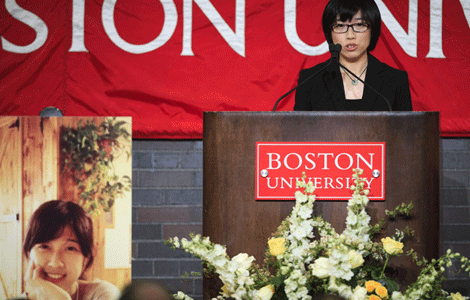 Funerals begin for Boston bombing victims
 Quake takeaway from China's Air Force
 Obama celebrates young inventors at science fair
 Earth Day marked around the world
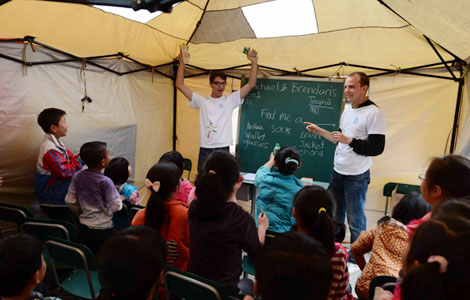 Volunteer team helping students find sense of normalcy
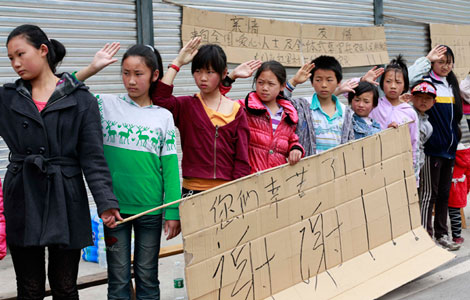 Ethnic groups quick to join rescue efforts
Most Viewed
Editor's Picks
|
|


|

|

|

|
Today's Top News
Health new priority for quake zone
Xi meets US top military officer
Japan's boats driven out of Diaoyu
China mulls online shopping legislation
Bird flu death toll rises to 22
Putin appoints new ambassador to China
Japanese ships blocked from Diaoyu Islands
Inspired by Guan, more Chinese pick up golf
US Weekly

|

|