Talks, not sanctions
Updated: 2012-06-14 08:10
(China Daily)
|
||||||||


By saddling unilateral sanctions on Iran, the United States is putting its domestic law above international law and the norms guarding international relations. Such a self-serving move will only add uncertainties to solving the Iranian nuclear crisis, which is showing signs of abating thanks to the international efforts to engage Teheran in talks and negotiations.
On Monday, US Secretary of State Hillary Clinton said Washington would exempt seven economies including India, Malaysia, the Republic of Korea and Turkey from an Iranian oil embargo under its national defense authorization act for 2012. So far 18 economies have been granted such an "honor" as Washington moves to impose sanctions on importing Iranian oil later this month. China is noticeably not included in the US exemption list.
The sanctions aim to throttle Iran's alleged nuclear program by cutting its funding from oil revenues. But by seeking to impose its own will on others, the US is impairing the interests of other countries who have normal economic ties with Iran.
Beijing always opposes the practice of saddling unilateral sanctions on a third country. It does not favor exerting excessive pressure on Iran or unilateral sanctions against it. It believes dialogue and negotiation are the only way to achieve a proper settlement of the Iranian nuclear issue and it is firmly against the use of force.
In fact, international efforts to break the Iranian nuclear impasse have already shown initial results, with two rounds of talks between Iran and the P5+1 powers - the United States, China, Russia, the United Kingdom, France and Germany - being held and a third round scheduled next week in Moscow. Teheran has held dialogues with the International Atomic Energy Agency too. The international community has every reason to continue to build on this good momentum.
The concerned parties should do more to contribute to the peaceful process and refrain from taking reckless moves that may escalate the tensions and undermine all the diplomatic efforts so far.
Washington should take new developments in the Iranian nuclear issue into consideration and stop pressing ahead with its unilateral sanctions, which are getting increasingly unpopular and look not at all promising in forcing Teheran to give in.
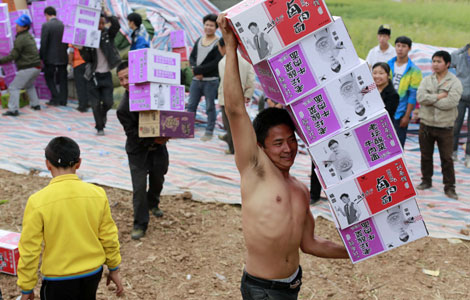
 Relief reaches isolated village
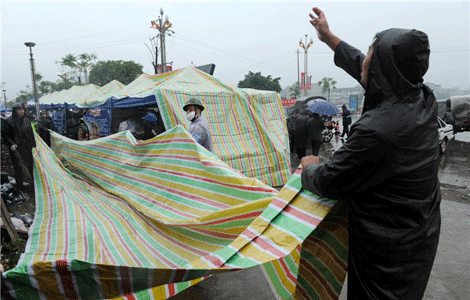 Rainfall poses new threats to quake-hit region
 Funerals begin for Boston bombing victims
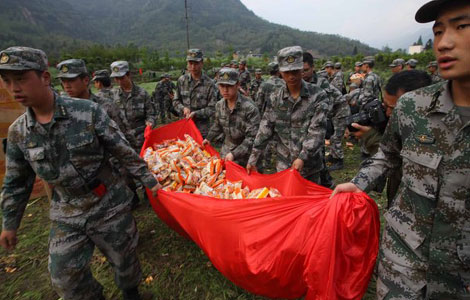 Quake takeaway from China's Air Force
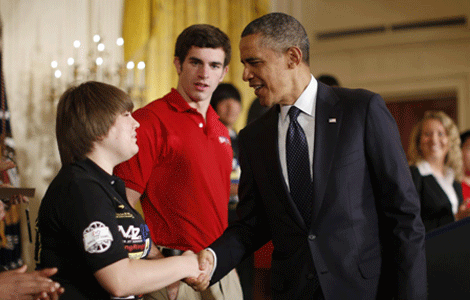 Obama celebrates young inventors at science fair
 Earth Day marked around the world
 Volunteer team helping students find sense of normalcy
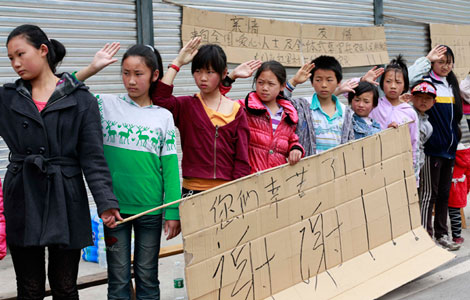 Ethnic groups quick to join rescue efforts
Most Viewed
Editor's Picks
|
|


|

|

|
|
Today's Top News
Health new priority for quake zone
Xi meets US top military officer
Japan's boats driven out of Diaoyu
China mulls online shopping legislation
Bird flu death toll rises to 22
Putin appoints new ambassador to China
Japanese ships blocked from Diaoyu Islands
Inspired by Guan, more Chinese pick up golf
US Weekly

|

|