Empower women for sustainable development
Updated: 2014-11-21 17:14
By Shamshad Akhtar(chinadaily.com.cn)
|
||||||||


This week, at the “Asian and Pacific Conference on Gender Equality and Women’s Empowerment: Beijing+20 Review”, ministers and other policymakers from across the region will have the opportunity to renew their political commitment to empower women and advance their status in all sectors.
Providing an impetus to the debate, the G20, which includes eight countries from the Asia-Pacific region, has called for reducing the gap between female and male labor force participation in their countries by 25 percent. Realization of this goal by 2025 — no small feat — would add 100 million more women to the labor force.
Asia and the Pacific could lead the way in this area. Facilitating women’s integration in formal employment, governments and the private sector need to, for instance, embrace flexible working hours and telework, tailored tax systems based on personal income (rather than family incomes), and provide high-quality affordable child and elderly care services. Such measures reflect a growing global and regional commitment to increasing the rates and quality of women’s participation in the workforce.
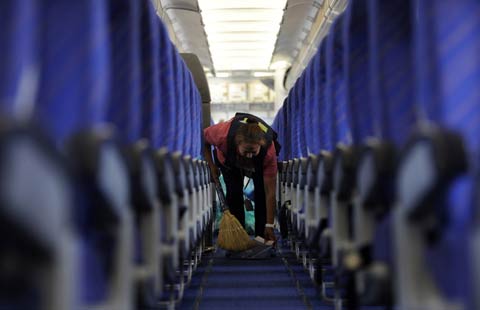
Equally important is challenging the underlying stereotypes and assumptions about childbearing, parenting and the roles of women and men at home and in the workplace. In particular, the needs and interests of vulnerable groups of women workers — such as domestic workers, migrant workers, informal sector workers and rural workers — need to be addressed. Traditional gender roles that confine women to caring, cashiering, cleaning, catering and clerical work must be revisited, if the “glass ceiling” is ever to be fully dismantled and the “sticky floor” cleaned.
Significant and substantive gains for women’s economic empowerment, and for gender equality more generally, require more resources, greater accountability, stronger partnerships and institutions, and better regional cooperation.
The author is an under-secretary-general of the United Nations and executive secretary of the Economic and Social Commission for Asia and the Pacific (ESCAP). She is also the UN’s Sherpa for the G20, and previously served as governor of the Central Bank of Pakistan and vice-president of the MENA region of the World Bank.

 Music at her fingers
 Across America Over the Week (Jan 16 - Jan 22)
 Spend Chinese New Year in style
 Ili river valley becomes a popular destination for swans
 Philip Ma: from scientist to businessman
 Birmingham's Spotlight on China dinner
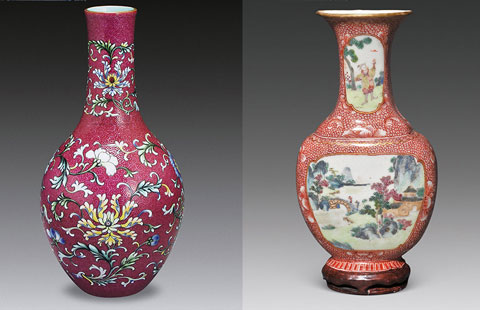 How to distinguish doucai, wucai, Famille-rose and enamel porcelain
 Xinjiang lake in bumper fishing season
Most Viewed
Editor's Picks
|

|


|

|
|
|
Today's Top News
Houston's SW Chinatown
China to focus on reforms, opening of capital market
Slowdown brings new risks to banks
Trade group calls for BIT
Market status for China is 'political' issue
Birmingham's Spotlight on China dinner
Bank takes renminbi-clearing seriously
Traditional Garb
US Weekly

|

|