State monopolies face a shake-up
Updated: 2014-11-25 07:29
By Sheng Hong(China Daily)
|
||||||||


Many economists argue that State monopolies increase State finances. But let the facts show how pale that excuse is: According to the National Bureau of Statistics, some monopolistic State-owned enterprises directly commanded by the central government have not contributed a single yuan to the State finances for a decade; on the contrary, they reported heavy losses.
Worse, many State monopolies use natural resources and State-owned lands for free, which could bring in more than a trillion yuan in rent a year. In other words, such kinds of State monopolies are a heavy burden, rather than a contributor, to State finance.
Therefore both the ordinary people and the State finances suffer as a result of monopolized industries; their losses are taken away by monopolies that become new interest groups. By absorbing improperly high profit, State monopoly managers pay extremely high salaries and shareholding returns to themselves, and consume luxuries in the name of "business needs".
As early as the first half year of 2003, managers of Sinopec, a monopoly over oil, were reported to have divided a bonus of 1.2 billion yuan among themselves; the same group spent 240 million yuan decorating a single office building in 2009.
The profit is derived through its dual role in the market economy: On the one hand, they are State agencies invested with power; on the other hand, they are enterprises seeking profit in the market. Raising the prices of monopolized products is only one of their measures for seeking improper profit; the others include renting monopoly rights to smaller businesses, issuing fines, and charging unnecessary fees, all of which increase the business costs of the whole society.
Worse, as managers of State monopolies belong to the same bureaucratic order as government officials, they often exchange each other's posts; in a certain national ministry, half of the officials had the experience of working in State monopolies. Thus monopoly intermingles with administrative power and strengthens itself in the process; that's also where resistance comes from every time there are calls for breaking State monopolies.
The central leadership recently vowed to rule according to the Constitution. From the constitutional view, the State should not set unnecessary monopolies, either; instead it should offer public products and collect equal, transparent tax, in order to ensure its neutrality in the economy. If the State participates in profit-taking industries, there is the danger it will use its power in hand to intervene the market and hurt other competitors, thus violating the basic principles of a market economy.
The principle of refraining from State intervention in the market has been recognized by not only Western economists, but also ancient Chinese scholars. As early as 2,000 years ago, in a debate on economic policy held at the royal court of the Han Dynasty (202 BC - 220 AD), scholars quoted a sentence from Confucianist scripture: "The State's role is not to seek profits, but to promote justice." It is time we acquire some wisdom from our ancestors.
The author is director of Unirule Institute of Economics, a Beijing-based independent think tank.

 Music at her fingers
 Across America Over the Week (Jan 16 - Jan 22)
 Spend Chinese New Year in style
 Ili river valley becomes a popular destination for swans
 Philip Ma: from scientist to businessman
 Birmingham's Spotlight on China dinner
 How to distinguish doucai, wucai, Famille-rose and enamel porcelain
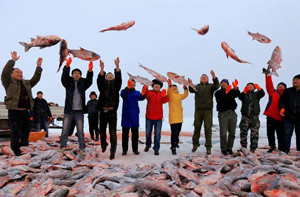 Xinjiang lake in bumper fishing season
Most Viewed
Editor's Picks
|

|


|

|

|
|
Today's Top News
Houston's SW Chinatown
China to focus on reforms, opening of capital market
Slowdown brings new risks to banks
Trade group calls for BIT
Market status for China is 'political' issue
Birmingham's Spotlight on China dinner
Bank takes renminbi-clearing seriously
Traditional Garb
US Weekly

|

|