Asia-Pacific nations lead climate fight
Updated: 2014-12-01 07:33
By Nicholas Rosellini and Kaveh Zahedi(China Daily)
|
||||||||


With the support of the PEI, Bangladesh has calculated that it spends $1 billion each year to fight and adapt to climate change. Three quarters of this is domestic revenue.
The government of Nepal has also been tallying its climate related costs, which have reached 6 percent of total government expenditure and 2 percent of GDP. This has led to the adoption of a climate budget code that helps track and hopefully increases funding to the fight against climate change. It has also led to greater transparency and wider distribution of the country's climate investments. Nepal's Ministry of Federal Affairs is now channeling climate funds to local authorities to aid poor women and men on the frontlines of climate change.
Indonesia has developed a budget tagging and scoring system to identify the allocations and expenditures on climate mitigation, and to assess the effectiveness of every dollar invested to achieve emission reduction targets. This is a vital tool as the country looks to meet its target of 26 percent to 41 percent reduction in greenhouse gas emissions by 2020.
New opportunities for finance brought by the Green Climate Fund, the new Asia Infrastructure Investment Bank and the BRICS Bank should ensure continued and increasing investment in the region's new climate economies. Private sector investments are also set to increase rapidly. At the UN secretary general's climate summit, a new finance coalition of governments, business, financial institutions and development banks pledged to mobilize $200 billion for low-carbon, climate-resilient development in developing countries. Given the current trend, a large part of this will be destined for Asia and the Pacific.
Countries in the Asia-Pacific are better placed and more ready to receive, absorb, track and ultimately benefit from climate financing regardless of its source. This is a critical step in their journey toward green economies that will deliver immediate benefits in reducing emissions and improving public health, energy efficiency and food security.
Nicholas Rosellini is UNDP's deputy regional director for Asia and the Pacific, and director of the Bangkok Regional Hub, and Kaveh Zahedi is UNEP's regional director and representative for Asia and the Pacific.

 Music at her fingers
 Across America Over the Week (Jan 16 - Jan 22)
 Spend Chinese New Year in style
 Ili river valley becomes a popular destination for swans
 Philip Ma: from scientist to businessman
 Birmingham's Spotlight on China dinner
 How to distinguish doucai, wucai, Famille-rose and enamel porcelain
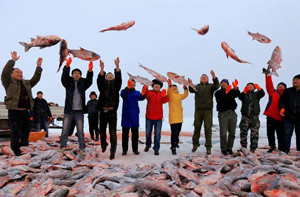 Xinjiang lake in bumper fishing season
Most Viewed
Editor's Picks

|

|


|

|

|

|
Today's Top News
Houston's SW Chinatown
China to focus on reforms, opening of capital market
Slowdown brings new risks to banks
Trade group calls for BIT
Market status for China is 'political' issue
Birmingham's Spotlight on China dinner
Bank takes renminbi-clearing seriously
Traditional Garb
US Weekly

|

|