The enigma that was 'Vinegar Joe'
Updated: 2015-03-06 11:40
By Zhao Xu(China Daily USA)
|
||||||||


 |
|
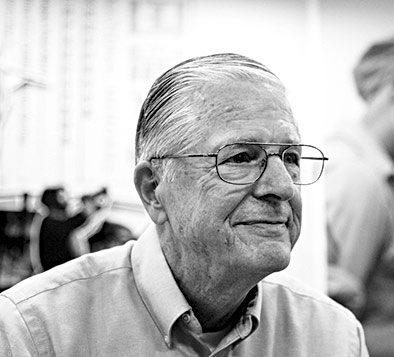
John Easterbrook, grandson of General Stilwell. |
A continuing legacy
Even so long after Stilwel's death, John Easterbrook said his grandfather's legacy is still palpable in the family.
"I still have some pieces of Chinese furniture and porcelain that he brought back to the States in the 1920s and 30s," he said. "There's also a Japanese machine gun from World War II. It turns out that he and his father-in-law invented the mechanism for the gun and patented it in the US, before it was stolen by the Japanese."
In 1980, during one of his many trips to China, John Easterbrook met a man who had been Stilwell's escort in the late 1930s. "He told me they were driving in a car when a Japanese warplane suddenly appeared," he said. "There was a house nearby and the escort told the general, 'Let's get into the house, but my grandfather simply replied, 'Get out of the car and get into the ditch!' So they jumped into a nearby ditch. The Japanese plane flew over them, dropped a bomb, and demolished the house."
Bernard Martin, a 93-year-old US veteran of the battle for Myitkyina who attended the photo exhibition in Beijing, said: "General Stilwell was a very hard commander, but it took a leader like him to push us hard to get the job done. He took a licking when he first went into the jungle and lost 90 percent of his men. He told what was left of the troops that it wouldn't happen again, and he kept his promise. Yesterday, we all hated him, but today I revere the man."
Ge, the historian, believes that feeling is typical of people who knew Stilwell. "The Chinese veterans that fought under Stilwell and spoke to me over the years invariably remembered him wearing battered army fatigues and carrying a carbine. He was one of them," he said. "For me, the 'tragedy' of Stilwell, who was forced to leave the CBI on the cusp of the Allied victory, lies in his being a soldier and a general, instead of a politician."
In one of the photographs at the exhibition, Stilwell is shown eating breakfast from a crude table in the open air in northern Burma. Wearing gaiters and without decorations or insignia on his uniform, nothing about the man suggests glory.
Yet, if not being allowed to continue with his improvements and witness the defeat of Japan first-hand came as a disappointment, Stilwell had good reason to feel content. During an interview in June 1944 he told a journalist, "If I can prove that the Chinese soldier is as good as any Allied solider, I'll die happy," according to John Easterbrook.
Before he left China for the last time, Stilwell wrote a letter to his subordinate Pan Yukun, commander of the 50th Division of the Chinese Expeditionary Forces, in which he stated: "I hope you will forget any misunderstandings and clashes of opinion we may have had, and think of me as your friend, and a friend of China."
Contact the writer at zhaoxu@chinadaily.com.cn
Yang Wanli contributed to this story.
 Plane skids off LaGuardia runway during snowstorm in NYC
 The Legend of Mulan told at Lincoln Center
 Six things you may not know about Awakening of Insects
 Top 10 favorite gift brands of rich Chinese men
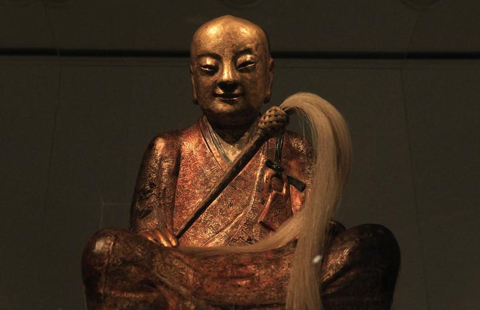 Buddha statue with mummified monk is museum draw
 Across Canada March 4
 Seven things you may not know about Lantern Festival
 Top 10 destinations for Chinese tourists
Most Viewed
Editor's Picks

|

|

|

|

|

|
Today's Top News
Birthing centers mum after raid in California
4 Chinese students look to take 'risk'
China likely to maintain 7% growth for 20 years
China's top two train makers to merge
Finance Minister: no spending spree
US fails to grasp China's terror laws
Militaries' cooperation 'key' in ties
China, California address climate, energy issues
US Weekly

|

|