Biggest fall in 20 years hits forex reserves
Updated: 2015-10-08 06:57
By CHEN JIA(China Daily)
|
||||||||


|
 |
|
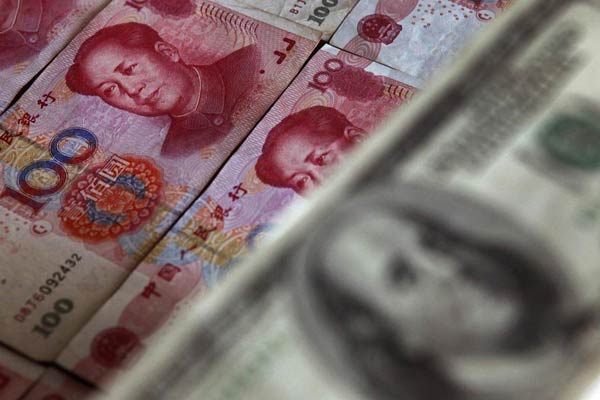
A photo illustration shows a $100 banknote placed above Chinese 100 yuan banknotes in Beijing in this May 10, 2013 file photo. [Photo/Agencies] |
China's foreign exchange reserves shrank by $180 billion in the third quarter-the largest fall in two decades-following the central bank's move to hold the yuan's value through selling US dollars.
However, the reserves fell by $43 billion in September after an unprecedented drop of $94 billion in August, suggesting that depreciation pressure on the yuan is easing.
The figures, released by the People's Bank of China on Wednesday, also showed that by the end of last month the foreign exchange reserves stood at $3.51 trillion-still the world's largest.
Declines in the reserves in recent months have sparked fears among investors about their sufficiency, liquidity and usability. Another question being raised is whether the squeezed reserves can cover the nation's foreign debt.
Recent research by UBS AG estimated that more than $2.2 trillion of the $3.5 trillion reserves were held in developed countries' government bonds, with about $1.4 trillion in US treasuries.
The foreign exchange reserves are four times the external debt amount and can cover 20 months of imported goods and services, according to the research.
Tom Orlik, an economist at Bloomberg, said, "A slower foreign exchange drop eases fears about extreme selling pressure on the yuan."
The currency's value stabilized last month after the biggest tumble in two decades following the People's Bank of China's adjustment of the yuan's daily exchange reference rate against the US dollar on Aug 11.
The yuan rose by 0.3 percent last month against the dollar compared with a fall of 2.6 percent in August, according to the Shanghai-based China Foreign Exchange Trade System.
President Xi Jinping committed to the yuan's stability during his state visit to the United States last month. Premier Li Keqiang has also reiterated on various occasions that there will be no foundation for a further depreciation of the currency.
These were signs that at least in the short term the depreciation pressure on the currency had been impaired, Orlik said. It also means the leaders are prepared to defend the currency at its present level for a while longer, and the total amount of the foreign exchange reserves will continue to decline, he added.
Economists said depreciation pressure on the yuan would remain as long as there was a possibility that the US Federal Reserve would raise interest rates in the near term.
- Robot monk with artificial intelligence makes debut
- Nursing homes, more Chinese old people's final choices
- Hit-and-run luxury car driver detained in Beijing
- Park officials say glass cracks don't affect walkway's safety
- China becomes smaller for tourists
- Scenic spots packed with tourists on National Day Holiday
-
 Taking a peek
  News you don't wanna miss over the National Day holiday
 TCM knacks to fight post-holiday syndrome
 Zhang Lei wins fourth season of Voice of China
 Travel rush around China as National Day holidays end
-
Rising yuan use may lift IMF basket prospects
 China wins first Nobel in medicine
-
Gary Locke: Candor key to relations
Most Viewed
Editor's Picks

|

|


|

|

|

|
Today's Top News
Tu first Chinese to win Nobel Prize in Medicine
Huntsman says Sino-US relationship needs common goals
Xi pledges $2 billion to help developing countries
Young people from US look forward to Xi's state visit: Survey
US to accept more refugees than planned
Li calls on State-owned firms to tap more global markets
Apple's iOS App Store suffers first major attack
Japan enacts new security laws to overturn postwar pacifism
US Weekly

|

|