On your mark, get set, sell
Updated: 2012-11-16 15:56
(China Daily)
|
||||||||


Company's safety labels are giving Chinese firms a leg up on competitors
Call it marketing gamesmanship or chalk it up as a simple and honest approach to consumers, but Lenovo, the Chinese electronics multinational, is leading the pack in China by pushing for more environmentally conscious certifications.
The company, which has its operational headquarters in North Carolina, recently received a new certificate called the Green Product Mark for its ThinkVision LCD display from TUV Rheinland, the Germany-based global provider of testing, inspecting and certification services.
|
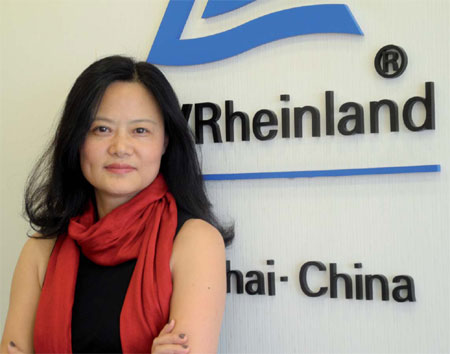 TUV Rheinland's Cathy Yan says Chinese companies are increasingly aware of green trends and get certificates for their green products. [Photo/China Daily] |
But unlike most companies in China, which settle for the China Compulsory Certification label that is the nation's standard mark for consumer safety, Lenovo voluntarily opted for both certifications on its new display.
"Back in the 1980s, (Chinese) companies just wanted a certificate to get their products exported to Western countries, but now some are volunteering to get their products tested even if it is not required by the government," says Cathy Yan, vice-president of TUV Rheinland's Greater China division.
While the voluntary move isn't game-changing, the trend is a sign of two things. First, more Chinese companies are maturing in their consumer outlook; and secondly, they are beginning to realize the importance of the Green Product Mark (which oddly enough uses a blue triangle in its label) in building their brands in international markets.
Chinese companies are hoping a certificate by a renowned independent testing company will give consumers more faith in their products' quality.
TUV Rheinland's certificate is based on four standards: responsible use of chemical substances, proper management of waste and recycled materials, energy efficiency and the size of a product's carbon footprint.
Established in 1872, TUV Rheinland is reaping the benefits of China's new marketing outlook. The company operates at more than 500 locations in 65 countries with 17,000 employees worldwide. It tests and inspects products from more than 10 industries, such as automobile parts, solar energy products and electronics. TUV Rheinland has nine locations in China with 3,000 employees.
Yan became the first Chinese employee at TUV Rheinland after it established a Shanghai office in 1989, a year after it opened an office in Hong Kong. She says that 20 years ago, products sent for tests were rudimentary products such as electric fans.
Now, clients come from many different sectors, such as solar energy, rail transportation and medical equipment, with products that are on the cutting edge of technology. The company's clients include big names such as GE and Philips.
This is a sign that Chinese companies are growing more aware of environmentally clean trends, Yan says.
"Eventually, their initiatives will influence other companies," she says.
As the recessions in Europe and North America continue, TUV Rheinland has gained more business from emerging markets such as China, Brazil, Turkey and India.
"In mature markets such as Germany, there is about a 2 percent growth rate every year, but in emerging countries, businesses are booming," Yan says, adding companies in China have been TUV Rheinland's most successful clients.
In 2011, companies in China contributed 16 percent of the company's total sales and 22 percent of profits, though it would not release total revenue figures. The Shanghai office is the company's biggest overseas testing center among its seven centers around the world.
 Relief reaches isolated village
 Rainfall poses new threats to quake-hit region
 Funerals begin for Boston bombing victims
 Quake takeaway from China's Air Force
 Obama celebrates young inventors at science fair
 Earth Day marked around the world
 Volunteer team helping students find sense of normalcy
 Ethnic groups quick to join rescue efforts
Most Viewed
Editor's Picks
|
|


|

|

|
|
Today's Top News
Health new priority for quake zone
Xi meets US top military officer
Japan's boats driven out of Diaoyu
China mulls online shopping legislation
Bird flu death toll rises to 22
Putin appoints new ambassador to China
Japanese ships blocked from Diaoyu Islands
Inspired by Guan, more Chinese pick up golf
US Weekly

|
|