Cameras and carbines capture life during wartime
Updated: 2015-09-06 04:33
By Zhao Xu(CHINA WATCH)
|
||||||||


 |
|
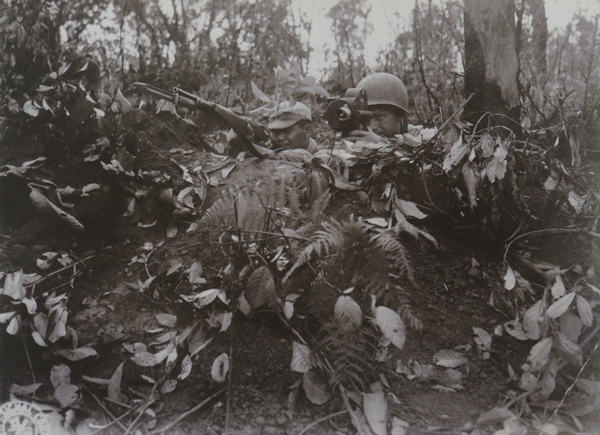
Camera and carbine were the tools of the photo company. PROVIDED TO CHINA DAILY |
American photographer Sydney Greenberg spent World War II roaming the countryside of southern China carrying a carbine in one hand and a camera in the other.
As a member of the U.S. Army’s 164th Signal Photo Company, his job was to record in images the China-Burma-India Theater (CBI), one of the toughest but least-reported battlegrounds.
Between 1943 and ’45, he took thousands of photos, many of them tinged with warmth and including idyllic landscapes where the war might be suggested only by the presence of one soldier.
“Most of my dad’s images show how the Chinese had tried to stabilize life a little bit within a war zone, and how they dealt with everyday life as it appeared in front of them,” his son, Philip, wrote in an email to China Daily. “He photographed the people around him who were part of his life and part of the war.”
Sydney Greenberg, who died in January 2012, arrived in China in the southwestern city of Kunming and was “welcomed by another air raid,” he wrote in his diary. He was 23 at the time and had just spent more than a month at sea with his comrades in the 164th. When the vessel reached India, the 250-strong company — officers, soldiers of other ranks, photographers and darkroom technicians — was divided into two groups: One stayed in India, the other headed to China.
 Veterans attend V-Day anniversary gala show
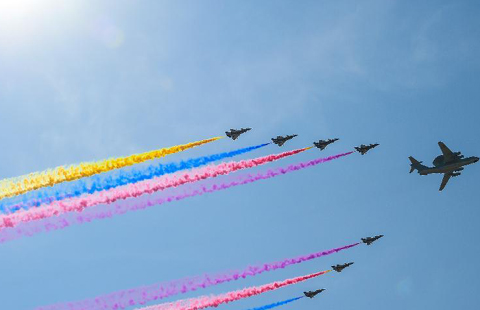 Military helicopters write number 70 high in the sky
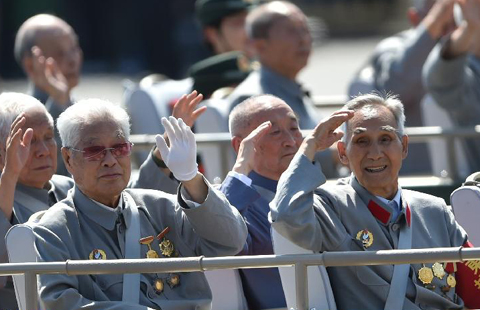 Salute to veterans
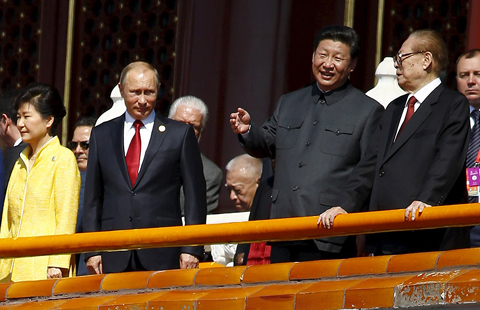 Xi attends the ceremony with other leaders
 Armored vehicles roll down the parade in huge roar
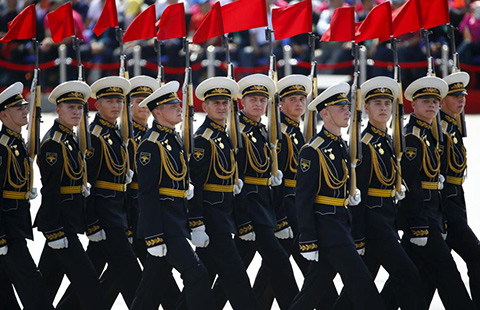 Foreign troops celebrate with Chinese comrades
 Red carpet ceremony for first grade kids
 Kashgar old city in Xinjiang is well preserved
Most Viewed
Editor's Picks

|

|


|

|
|

|
Today's Top News
Sino-Russian investment fund eyes more deals
Predicting Internet's future without a crystal ball
Silk Road Fund to expand ties with lenders
Intl community echoes Xi's speech at V-Day commemoration
Envoy hails New York resolutions
Nation's military power grows but still trails behind
China to cut troops by 300,000: President Xi
Springfield gets Chinese railcar plant
US Weekly

|

|