Cameras and carbines capture life during wartime
Updated: 2015-09-06 04:33
By Zhao Xu(CHINA WATCH)
|
||||||||


 |
|
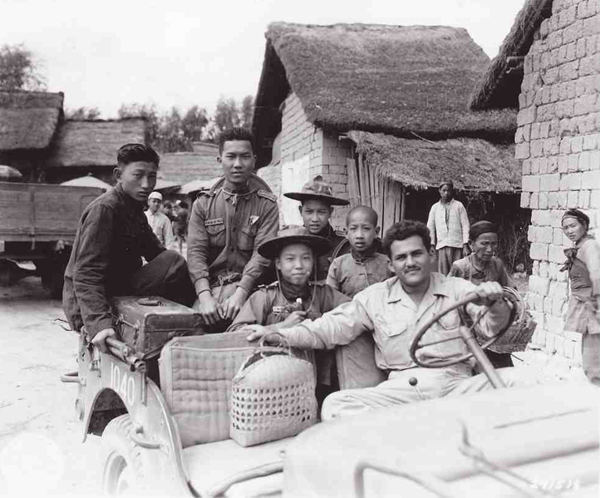
Sydney Greenberg with Chinese youths in Yunnan province in 1944.PROVIDED TO CHINA DAILY |
One of Sydney Greenberg’s best-known photos shows a gun-toting Chinese soldier atop a tank during monsoon season, watching as a U.S. Air Force plane appears out of the clouds, dropping food for the Allies. While the heavy, low-hanging clouds conjure an apocalyptic atmosphere, the towering image of the soldier appears as a beacon of hope and a powerful symbol of resistance.
To develop and print the unit’s photos, negatives were sent to primitive laboratories, mud buildings where chemicals were weighed on aged scales borrowed from drugstores.
When they were not out snapping their shutters, the photographers “sat in dugout trenches and watched the bursts of hand grenades,” as Sydney Greenberg described it in his diary. “It’s almost like a motion picture. Flares light up the sky; red, blue, and green, then a white one.”
On Sept. 9, 1945, the Japanese Imperial Army officially surrendered in Nanjing, then known as Nanking. The war was over, and Sydney Greenberg was on hand to capture the scenes of jubilation.
The war over, he returned home to the U.S., and he continued to take photos. He also served his hometown as justice of the peace for over 40 years and gave regular lectures about his days in China. Yet despite his love of the country, he was reluctant to return. “He wanted the memories he had collected to remain undisturbed,” Philip Greenberg said.
In 2011, at the age of 92, the photographer was invited to visit Chongqing for an exhibition showcasing the work of the 164th Signal Photo Company. Unable to travel due to a car accident, he recorded a video message for the opening ceremony, saying: “A new and fascinating world was opened to me. You people took me in as a pengyou (friend).”
This year, Yan Huan, an amateur historian like Niu, stumbled over a Greenberg image stored at the National Archive in Washington that had previously eluded him.
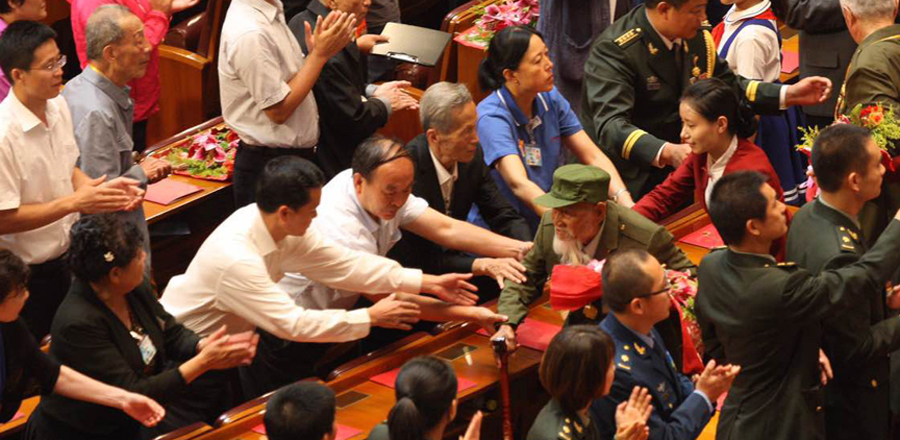
 Veterans attend V-Day anniversary gala show
 Military helicopters write number 70 high in the sky
 Salute to veterans
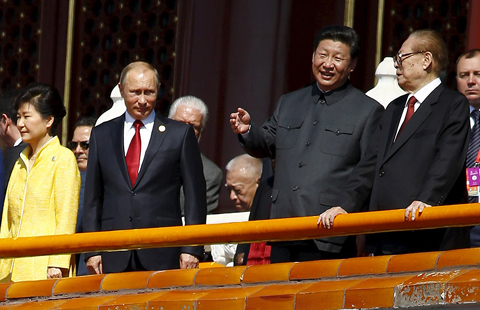 Xi attends the ceremony with other leaders
 Armored vehicles roll down the parade in huge roar
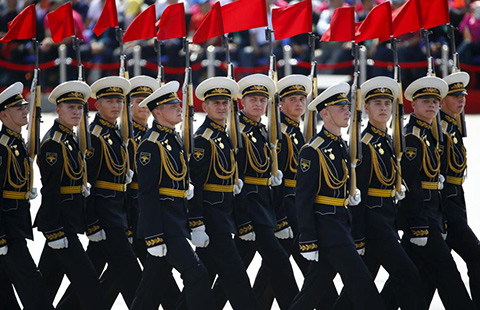 Foreign troops celebrate with Chinese comrades
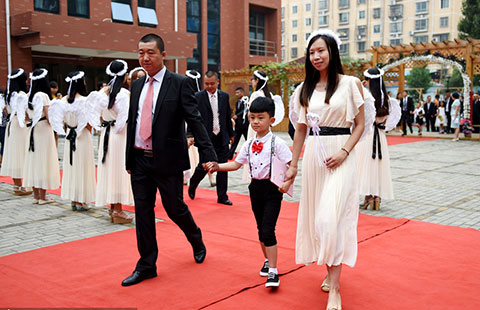 Red carpet ceremony for first grade kids
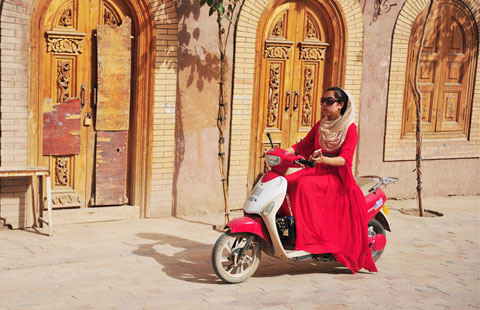 Kashgar old city in Xinjiang is well preserved
Most Viewed
Editor's Picks
|
|


|
|
|

|
Today's Top News
Sino-Russian investment fund eyes more deals
Predicting Internet's future without a crystal ball
Silk Road Fund to expand ties with lenders
Intl community echoes Xi's speech at V-Day commemoration
Envoy hails New York resolutions
Nation's military power grows but still trails behind
China to cut troops by 300,000: President Xi
Springfield gets Chinese railcar plant
US Weekly

|

|