Take the (crazy) microphone
Updated: 2012-06-29 07:39
By Kyle David (China Daily)
|
||||||||


|
A typical Chinese speech sounds like an audio recording of a Victorian novel. Provided to China Daily |
Non-native speakers can find it hard to rise to the occasion
用中文做演讲对西方人确实是个挑战,尤其要避免误入误区。
The outside temperature was -28 C but Jason Prater, a sales intern on business in Northeast China, was sweating bullets.
"I was the only person burning up in the building, but then again, I was about to give a speech in Chinese to hundreds of strangers," Jason recounts. "I had already botched the tones on 老板 (lǎobǎn) and called my boss my 老伴儿 (lǎobànr), or old spouse, instead. My opening joke about his comb-over had not gone over well. It was an utter catastrophe."
Long after speaking to small groups has become second nature, the thought of addressing a room full of expectant strangers leaves even the most talented language learners tongue-tied with terror.
There are also cultural nuances to be considered. In the West, the KISS principle reigns supreme: Keep It Simple, Stupid. By contrast, a typical Chinese speech sounds like an audio recording of a Victorian novel. "They tend to use a lot of over-the-top language," a Canadian student comments. "Their method of public speaking sounds overly eloquent to the Western ear, but it is all part of the culture."
Fear not. With this article and some practice in front of the mirror, you will be one step closer to wowing your audience with an excellent oration.
Extravagant beginnings
Western presenters tend to get right down to business after a brief introduction. In China, the start of a speech is an elaborate opportunity to praise hosts, previous speakers and distinguished guests.
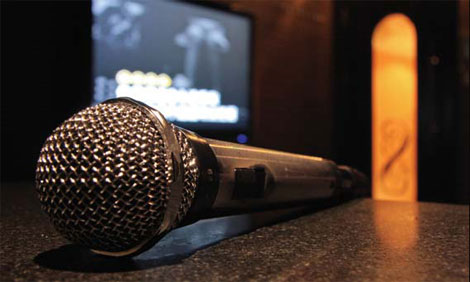
"Get everyone's names and titles right," says Daniel Rochette, a Chinese-language researcher. "Before my first time ever presenting in China, a stage hand showed me around backstage. I thought I heard him say, 麦克疯了 (Màikè fēng le) or, 'Mike is crazy.' When a colleague arrived with a group of Chinese guests, I went up to the one named Mike and said in Chinese, 'Oh, and you must be crazy Mike.' It turns out the stage hand was not referring to Mike, but to the microphone (麦克风 màikèfēng). Thankfully I got that cleared up before I had to introduce Mike on stage."
Use your speech to give face to VIPs and colleagues. Try to avoid calling them crazy.
Distinguished (surname and title), ladies and gentlemen, good afternoon.
Zūnjìng de ..., nǚshì men, xiānshēng men, xiàwǔ hǎo!
尊敬的 ...,女士们,先生们,下午好!
I represent ...
Wǒ dàibiǎo ...
我代表 ...
I'd like to express my thanks to ...
Wǒ duì ... biǎoshì gǎnxiè!
我对 ... 表示感谢!
I am Ren Dawei and I represent the company's American branch office. First, I'd like to express my thanks to Chairman Chen and Supervisor He.
Wǒ shì rèndàwěi, qǐng yǔnxǔ wǒ dàibiǎo měiguó fēn bù, duì chén zǒngcái yǐjí hé jīnglǐ biǎoshì gǎnxiè!
我是任大伟,请允许我代表美国分部,对陈总裁以及何经理表示感谢!
This kind of flowery language would torment a Western crowd, but to your Chinese audience it is music to the ears. Eloquence is bound to get you in the good books with your guanxi (关系 relationships).
The content of her speech was original and clear. It really hit the mark.
Tā de fǎyán tiáolǐ qīngxī, jiànjiě dúdào, qièzhòng yàohài.
她的发言条理清晰,见解独到,切中要害。
She has vast experience and knowledge.
Tā jiàn duō shí guǎng, xué fù wǔ chē.
她见多识广,学富五车。
Funny to the right degree
Humor often doesn't translate well. Poking fun at a superior's fashion sense is a great crowd warmer back home, but doing so here spells disaster.
One presenter learned this the hard way. "I was giving a presentation in Beijing on our research findings. I opened with what I thought was a great joke. I said, 'There's something special in the air over here in China that makes me feel different ... I think it's a mix of lead, methane, and perhaps copper.'" The audience barely produced a grin.
In contrast, the former prime minister of Australia got his crowd howling when he opened with the line, "(The person who just introduced me) commented that my Chinese is very fluent, but he's just being polite. My Chinese is getting worse by the day. In China, there's an old saying: 'Nothing to fear in all heaven and hell, save for the laowai who speaks Chinese well.'"
Supervisor: He was being polite just now when he said I speak fluent Chinese.
Hé jīnglǐ gāngcái shuō wǒ de hànyǔ fēicháng liúlì, qíshí tā shì kèqì le.
何经理刚才说我的汉语非常流利,其实他是客气了。
My Chinese is really very ordinary.
Wǒ de hànyǔ shuǐpíng hěn yībān.
我的汉语水平很一般。
Nothing to fear in all heaven and hell, save for the laowai who speaks Chinese well.
Tiān bùpà, dì bùpà, jiù pà lǎowài shuō zhōngguó huà.
天不怕,地不怕,就怕老外说中国话。
Straightforward structure
After warming up the crowd, you can finally get down to business. The good news is that presentation structures flow similarly to what you are already used to.
The topic of today's meeting is ...
Běn cì huìyì de yìtí shì ...
本次会议的议题是 ...
First ...
Shǒuxiān ...
首先 ...
Second ...
Qícì ...
其次 ...
Also ...
Zàicì ...
再次 ...
Last ...
Zuìhòu ...
最后 ...
First, we're going to look at the results of a global e-commerce consumer behavior survey.
Shǒuxiān, wǒmen lái kàn yīxià quánqiú diànzǐ shāngwù xiāofèi xíngwéi de diàochá jiéguǒ.
首先,我们来看一下全球电子商务消费行为的调查结果。
Go get them!
No speech is complete without some words of encouragement. Use the phrases below to add some "oomph" to your message.
devote oneself to intense hard work
máitóu kǔ gàn
埋头苦干
achieve brilliant success
qǔdé yuánmǎn chénggōng
取得圆满成功
In order to realize this great vision, we must devote ourselves to hard work.
Yào shíxiàn zhè měihǎo de yuàn jǐng, wǒmen zhǐyǒu máitóu kǔ gàn.
要实现这美好的愿景,我们只有埋头苦干。
Grand finale
The closing of a Chinese presentation is not only a chance to summarize main points for the audience, but also to thank special guests in attendance and exhibit modesty.
Finally, I'd like to say ...
Zuìhòu, wǒ xiǎng shuō de shì ...
最后,我想说的是 ...
I'd like to thank you all for your tremendous support in today's meeting.
Gǎnxiè nǐmen duì běn cì huìyì de dàlì zhīchí.
感谢你们对本次会议的大力支持。
I hope we are able to use this opportunity to strengthen communication.
Xīwàng wǒmen nénggòu jiè cǐ jīhuì jiāqiáng gōutōng.
希望我们能够借此机会加强沟通。
Courtesy of The World of Chinese, www.theworldofchinese.com
The World of Chinese
(China Daily 06/29/2012 page19)
 Relief reaches isolated village
 Rainfall poses new threats to quake-hit region
 Funerals begin for Boston bombing victims
 Quake takeaway from China's Air Force
 Obama celebrates young inventors at science fair
 Earth Day marked around the world
 Volunteer team helping students find sense of normalcy
 Ethnic groups quick to join rescue efforts
Most Viewed
Editor's Picks
|

|


|

|

|

|
Today's Top News
Chinese fleet drives out Japan's boats from Diaoyu
Health new priority for quake zone
Inspired by Guan, more Chinese pick up golf
Russia criticizes US reports on human rights
China, ROK criticize visits to shrine
Sino-US shared interests emphasized
China 'aims to share its dream with world'
Chinese president appoints 5 new ambassadors
US Weekly

|

|