Full Text: China Adheres to the Position of Settling Through Negotiation the Relevant Disputes Between China and the Philippines in the South China Sea
Updated: 2016-07-13 15:06
(Xinhua)
|
||||||||


IV. The Philippines Has Repeatedly Taken Moves that Complicate the Relevant Disputes
i. The Philippines attempts to entrench its illegal occupation of some islands and reefs of China's Nansha Qundao
ii. The Philippines has increasingly intensified its infringement of China's maritime rights and interests
iii. The Philippines also has territorial pretensions on China's Huangyan Dao
iv. The Philippines' unilateral initiation of arbitration is an act of bad faith
V. China's Policy on the South China Sea Issue
i. On the territorial issues concerning Nansha Qundao
ii. On maritime delimitation in the South China Sea
iii. On the ways and means of dispute settlement
iv. On managing differences and engaging in practical maritime cooperation in the South China Sea
v. On freedom and safety of navigation in the South China Sea
vi. On jointly upholding peace and stability in the South China Sea
Introduction
1. Situated to the south of China's mainland, and connected by narrow straits and waterways with the Pacific Ocean to the east and the Indian Ocean to the west, the South China Sea is a semi-closed sea extending from northeast to southwest. To its north are the mainland and Taiwan Dao of China, to its south Kalimantan Island and Sumatra Island, to its east the Philippine Islands, and to its west the Indo-China Peninsula and the Malay Peninsula.
2. China's Nanhai Zhudao (the South China Sea Islands) consist of Dongsha Qundao (the Dongsha Islands), Xisha Qundao (the Xisha Islands), Zhongsha Qundao (the Zhongsha Islands) and Nansha Qundao (the Nansha Islands). These Islands include, among others, islands, reefs, shoals and cays of various numbers and sizes. Nansha Qundao is the largest in terms of both the number of islands and reefs and the geographical area.
3. The activities of the Chinese people in the South China Sea date back to over 2,000 years ago. China is the first to have discovered, named, and explored and exploited Nanhai Zhudao and relevant waters, and the first to have continuously, peacefully and effectively exercised sovereignty and jurisdiction over them. China's sovereignty over Nanhai Zhudao and relevant rights and interests in the South China Sea have been established in the long course of history, and are solidly grounded in history and law.
- Chinese defense minister rejects South China Sea arbitration award
- Serbia supports peaceful resolution of South China Sea dispute
- Czech expert warns US and the Philippines not to play fire in South China Sea
- Overseas Chinese urged to support sovereignty for South China Sea
- Net users angry at tribunal's ruling over South China Sea
- Wider support for China's South China Sea stance
- Arbitration body 'has nothing to do' with us, says UN
- Trump expected to make VP announcement on Friday
- 25 killed, 50 injured as trains collide in Italy
- The South China Sea Arbitration: Illegal, Illegitimate and Invalid
- Theresa May set to be UK's next Prime Minister after rival stands down
- Killing of UN Chinese peacekeepers slamed

 Ruling 'null and void', with no binding force
 Sports star Ivanovic, Schweinsteiger holds wedding in Venice
 Tim Duncan announces retirement after 19 seasons with Spurs
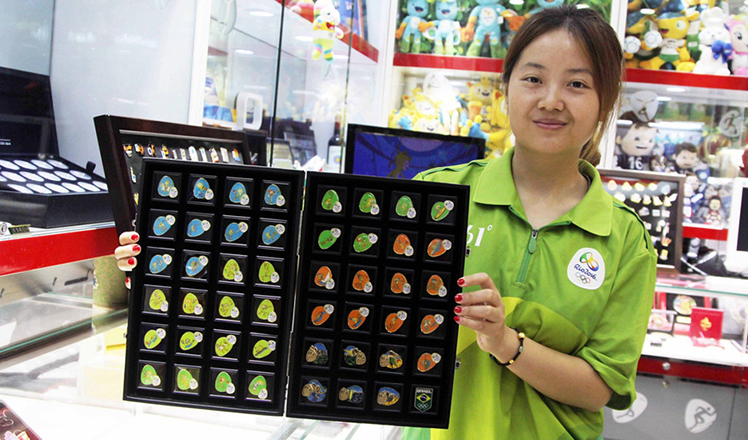 Merchandize for Rio 2016 a hit in run-up to games
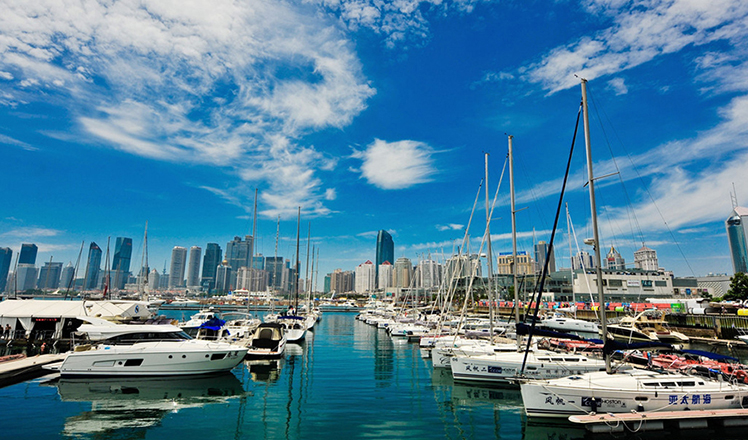 Top 10 best Chinese cities to own a house
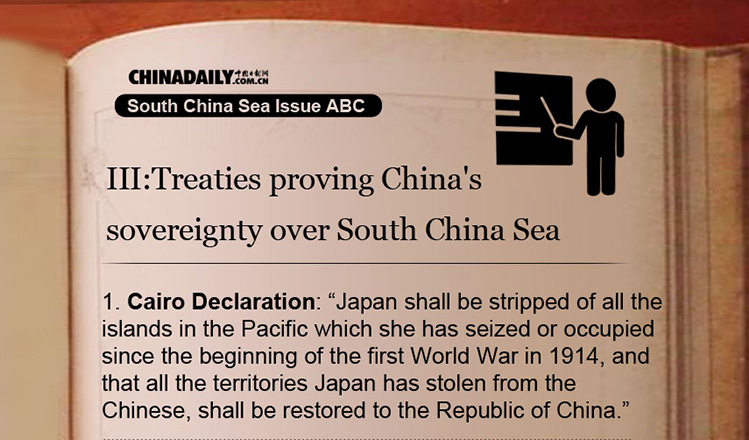 Getting to know South China Sea Issue
 Ronaldo-less Portugal wins Euro 2016 title
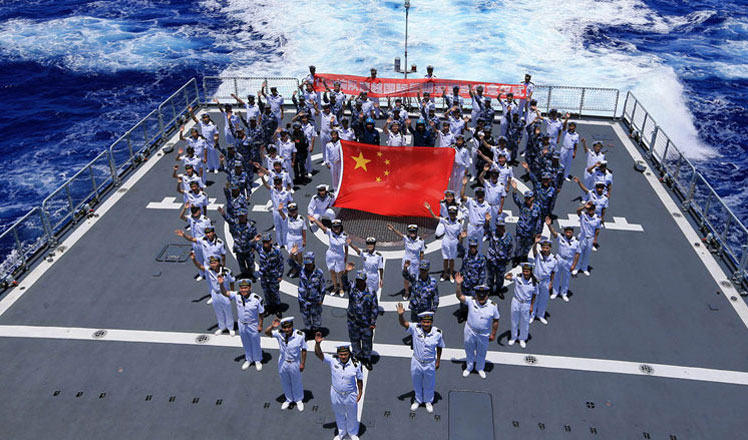 Chinese navy fleet joins RIMPAC 2016 open day
Most Viewed
Editor's Picks
|

|


|
|

|

|
Today's Top News
Ministry slams US-Korean THAAD deployment
Two police officers shot at protest in Dallas
Abe's blame game reveals his policies failing to get results
Ending wildlife trafficking must be policy priority in Asia
Effects of supply-side reform take time to be seen
Chinese State Councilor Yang Jiechi to meet Kerry
Chinese stocks surge on back of MSCI rumors
Liang avoids jail in shooting death
US Weekly

|

|