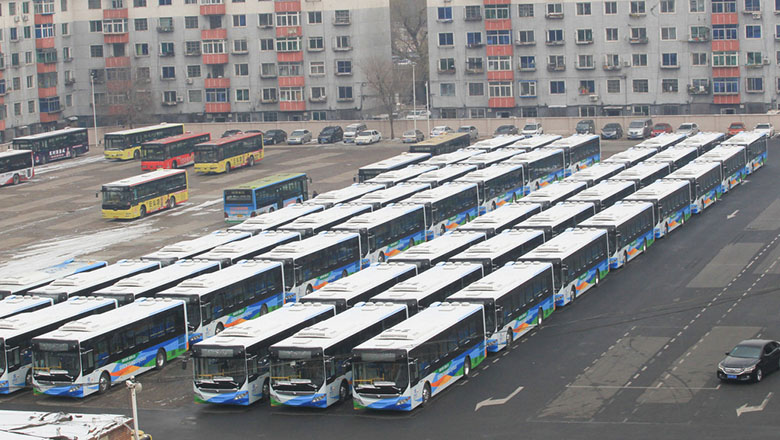
China: Seeking a clear day
Updated: 2016-09-30 12:12
(China Daily USA)
|
||||||||


The other method of pricing carbon involves the use of a carbon tax on fossil fuels that contribute to the creation of greenhouse gases. For example, a country may increase the tax on gasoline to encourage less driving.
Some 40 countries and more than 20 cities, states and provinces already use carbon pricing mechanisms, with more planning to implement them in the future, according to the World Bank.
In the US, there is very little political appetite for a national emission trading plan. In 2010 legislation to introduce a federal cap and trade plan faltered in Congress. However, California, and the Regional Greenhouse Gas Initiative covering nine states in the Northeast, have implemented their own emission trading systems.
In 2011, China's National Development and Reform Commission designated four municipalities (Beijing, Chongqing, Shanghai and Tianjin), two provinces (Guangdong and Hubei) and the special economic zone of Shenzhen City as regions for emission trading system pilots.
"The goal is to integrate these pilots into the rollout of the national ETS to reduce CO2 emissions and incentivize clean energy development in China," Bo Kong, a professor at the University of Oklahoma, told China Daily.
Kong said the pilot programs means "China won't start from scratch and the experience at the local level has provided the government with knowledge that they can build on" for its trading platform.
EU's system
China was also able to draw upon the experience of the European Union's (EU) emission trading system. Launched in 2005, the system (EU ETS) is a cornerstone of the EU's policy to combat climate change and it's a key tool for reducing industrial greenhouse gas emissions cost-effectively. The EU ETS covers more than 11,000 power stations and industrial plants in 31 countries, as well as airlines.
China and the EU launched a cooperation project on carbon emission trading in 2014. With the support of EU observers and relevant agencies, almost 20 training programs were organized, helping to improve the abilities of administrative staff, technical personnel and other stakeholders in China.
Jorgenson said China's ETS will focus on the heavy industries, particularly industries that use a lot of coal and also metals, cement and utilities.
"ETS tends to focus on major industries and power plants - iron, steel, cement and paper. Services and transportation are not included," said Chris Nielsen, executive director of the Harvard China Project. The project is a research program involving schools at Harvard and Chinese universities that conduct studies related to air pollution and greenhouse gases in China.
Using a steel plant, Jorgenson provided an example of how China's ETS will operate. "Authorities will allocate permits to the steel plant based in part on the previous levels of its carbon emissions. The plant will have to monitor its emissions and then provide the permits to carry out its operation," he said. "If the plant anticipates it will use more carbon than its permits allow, it will have to go into the market and purchase more permits."
If the plant produces fewer emissions, it can sell its excess permits in the ETS.
Pricing and market liquidity will depend on several factors including information availability, said Kong.
"For this market to work, you have to have the ability to verify and correct your data," he said. "It will take some time, and they must also develop the professionals who will be needed to engage in carbon trading and making sure the market runs smoothly."

 Top 10 Chinese cities with 'internet plus transportation’
 New energy cars shine at Paris Motor Show
 23 baby giant pandas make debut in Chengdu
 Heritage list salutes Chinese architecture
 Happy hour for prince and princess in Canada
 Chinese and Indian sculptures on display at the Palace Museum in Beijing
 Rescue work at the typhoon-hit provinces
 Wonderland-like sunrise in East China
Most Viewed
Editor's Picks
|

|

|

|

|

|
Today's Top News
Trump outlines anti-terror plan, proposing extreme vetting for immigrants
Phelps puts spotlight on cupping
US launches airstrikes against IS targets in Libya's Sirte
Ministry slams US-Korean THAAD deployment
Two police officers shot at protest in Dallas
Abe's blame game reveals his policies failing to get results
Ending wildlife trafficking must be policy priority in Asia
Effects of supply-side reform take time to be seen
US Weekly

|

|